Meteora, Greece, is arguably the most spectacular destination on the Greek mainland, and one of the most awe-inspiring places in all of Europe. The name itself means ‘suspended in the air’, and when you stand before these extraordinary sandstone pillars towering up to 600 metres above the Thessalian plain, each one crowned with a centuries-old Byzantine monastery, the name feels entirely inadequate. A UNESCO World Heritage Site since 1988, Meteora is a must for any Greece itinerary, whether you’re visiting for the monasteries, the hiking, the legendary sunsets, or simply the otherworldly scenery.
Meteora is a highlight of our complete Greece travel guide, one of our essential mainland stops.
| Location | Thessaly, central Greece — near Kalambaka |
| UNESCO | World Heritage Site since 1988 |
| Active monasteries | 6 (of original 24) |
| Entry fee | €3 per monastery (€5 in some) — cash only |
| Dress code | Shoulders & knees covered — wraps available at entrance |
| From Athens | ~4 hours by car / ~5 hours by train |
| From Thessaloniki | ~2.5–3 hours by car |
| Best time | Spring (April–May) or Autumn (September–October) |
| Recommended stay | Minimum 2 days |
| Where to stay | Kalambaka (more amenities) or Kastraki (closer to monasteries) |
| Tours & activities | 👉 GetYourGuide — Meteora |
| Car rental | 👉 Discovercars.com |
| Accommodation | 👉 Booking.com — Meteora |
Where is Meteora, Greece?
Meteora is located in Thessaly, central Greece, situated just north of the town of Kalambaka and south of the village of Kastraki, in the valley of the Pineios River at the foot of the Pindus Mountains.
It is approximately:
- 360km north of Athens — about 4 hours by car or 5 hours by train
- 230km west of Thessaloniki — about 2.5–3 hours by car
The area is defined by massive sandstone rock pillars that rise from the plain like giants. These pillars were formed over millions of years by the erosion of an ancient seabed. Starting in the 14th century, Orthodox monks built 24 monasteries on top of these formations, seeking solitude and protection from Ottoman raids. Today, 6 active monasteries remain, all open to visitors.
How to get to Meteora from Athens
Meteora is approximately 360km from Athens — about 4 hours by car.
By car (recommended for flexibility): Take highway E75 northbound from Athens, then E65 via Lamia and Domokos, follow signs for Karditsa → Trikala → Kalambaka. GPS is essential as signs are often in Greek only. Compare car rental prices on Discovercars.com.
By train: From Larissa Station (Metro Line 1), Athens is approximately 5 hours. 4 trains daily, some direct, some with a change at Paleofarsalos. Book well in advance for weekends.
By bus: From Tris Gefires bus station (KTEL), Athens — approximately 5 hours. Regular daily service.
Day trip or overnight? A day trip from Athens is technically possible, but we strongly advise against it; the monasteries close at 15:00–17:00, and you’d miss the sunset, which is the defining Meteora experience. Stay at least 1 night, ideally 2.
Arriving from Athens? Read our guide to the top things to do in Athens before heading north.
Visit the Monasteries
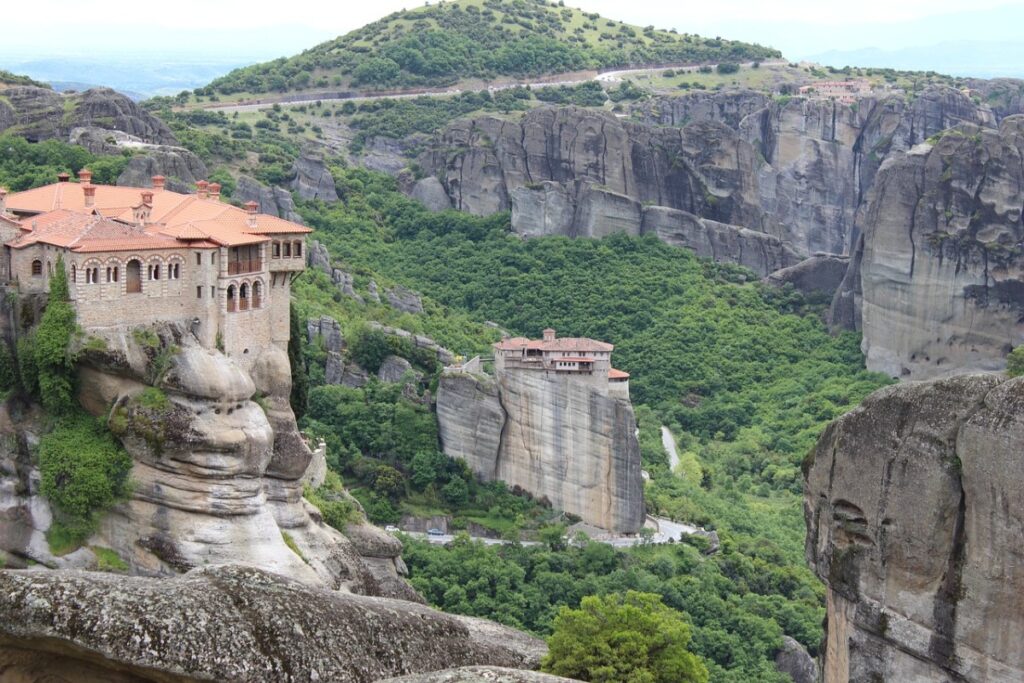
Meteora’s most captivating feature is undoubtedly its monasteries, which date back to the 14th century. Out of the original 24, six are still active and open to visitors, each offering a unique glimpse into the region’s rich spiritual and cultural heritage:
Great Meteoron Monastery: The largest and most famous of the monasteries, Great Meteoron, also known as the Monastery of Transfiguration of Christ, is a must-visit. It offers stunning views and houses a fascinating museum showcasing religious artifacts and manuscripts. Established in the 14th century by Athanasios the Meteorite, it features impressive frescoes and a large refectory where monks once gathered for meals.
Varlaam Monastery: Known for its beautiful frescoes and impressive wooden pulpit, Varlaam is the second largest monastery in Meteora. It was named after the first hermit to ascend the rock and found the original structure in 1350. The monastery today includes a small museum and magnificent 16th-century frescoes.
Rousanou Monastery: Easily accessible and surrounded by lush greenery, Rousanou is known for its ornate interiors and friendly nuns. Founded in 1545 by Maximos and Ioasaph of Ioannina, it is dedicated to St. Barbara. The monastery’s charming garden and well-maintained pathways make it a serene spot for reflection and photography.
St. Stephen’s Monastery: Perched on the edge of a cliff, St. Stephen’s is accessible by a small bridge and offers panoramic views of the valley below. This convent, established in the 15th century, is home to nuns who warmly welcome visitors. Inside, you can find a church adorned with beautiful icons and an array of religious artifacts.
Holy Trinity Monastery: One of the most dramatic monasteries, Holy Trinity is perched on a solitary rock pillar and requires a hike to reach. Founded in 1458, it was featured in the James Bond movie “For Your Eyes Only.” The effort to reach the top is rewarded with breathtaking views and a sense of tranquility.
St. Nicholas Anapausas Monastery: The smallest of the active monasteries, St. Nicholas is known for its beautiful frescoes and peaceful atmosphere. Despite its size, it boasts a rich collection of religious art. Renovated in the early 16th century, it offers a serene escape from the more crowded sites.
| Monastery | Founded | Closed | Notable for |
|---|---|---|---|
| Great Meteoron | 14th century | Tuesday | Largest & oldest, 300 steps |
| Varlaam | 14th century | Friday | Best museum, finest frescoes |
| Roussanou | 16th century | Wednesday | Nunnery, lowest & most accessible |
| Holy Trinity (Agia Triada) | 15th century | Thursday | James Bond filming location |
| St. Stephen’s (Agios Stefanos) | 16th century | Monday | Easiest access — bridge, no steps |
| St. Nicholas (Agios Nikolaos) | 14th century | Tuesday | Theophanes Strelitzas frescoes |
Opening hours change seasonally. Always verify at visitmeteora.travel before your visit.

Hiking and rock climbing in Meteora
Meteora has an extensive network of hiking trails used by monks and pilgrims for centuries, and hiking is arguably the best way to experience the landscape away from tour bus crowds.
Most popular routes:
- Kalambaka → Holy Trinity Monastery: starts from town, 145 steps to monastery entrance, well-marked
- Kastraki → Great Meteoron via Varlaam: passes through forest, uphill but manageable
- Psaropyrgos & Cyclops Cave trail: 11.8km from Chora, passes an ancient formation and a legendary cave
Hiking requires no specialist equipment. Trails are accessible for walking from April to October. Spring hiking is especially beautiful with wildflowers. Allow a full day if you want to hike between multiple monasteries.
💡 Tip: If you want a guide who knows the hidden paths and monastic legends, book a guided hiking tour on GetYourGuide.
Meteora Sunset — The best viewpoints
Watching the sun set over Meteora’s monasteries is one of the most unforgettable experiences in Greece, possibly in all of Europe. As the light turns golden and then deep orange, the white monastery walls glow against the darkening sky in a scene that feels completely otherworldly.
Great Meteoron viewpoint: from the main road near the monastery car park
Psaropetra (Fish Rock): the most popular spot; arrive 30+ minutes early in peak season to secure a place
Sunset Rock: on the main road between the monasteries, offers views of four monasteries simultaneously
Watching the sunset over the rock formations of Meteora is a magical experience. There are several vantage points where you can enjoy the sunset, but some of the best include the viewpoint near St. Stephen’s Monastery, where you have a wide view of the rock formations and the valley below, and the Psaropetra Lookout, which is known for its panoramic views and the perfect spot for capturing the stunning colors of the sunset.
Other things to do in Meteora
Meteora by Night
Seeing Meteora by night is a unique experience, as the rock formations and monasteries are illuminated, creating a mystical atmosphere. Night tours often include stargazing and learning about the region’s history and legends.
Visit the Meteora Natural History Museum and Mushroom Museum
The Meteora Natural History Museum and Mushroom Museum in Kalambaka feature exhibits showcasing local wildlife, including birds, mammals, reptiles, and insects that call Meteora home. These displays offer insights into the diverse ecosystems and species that thrive in this unique environment. The museum also features informative presentations on the geological formations that define Meteora’s iconic rock pillars, revealing the geological processes that have shaped these towering landmarks over millions of years.
A highlight of the museum is its distinctive collection of mushrooms, both edible and non-edible varieties found in the forests and fields surrounding Kalambaka. This collection not only showcases the region’s fungal diversity but also highlights the importance of mushrooms in local ecology and culture.
For those seeking a more interactive experience, the museum offers educational programs, guided tours, and workshops. These activities cater to visitors of all ages, providing hands-on learning opportunities and deeper insights into the natural world of Meteora. Knowledgeable guides lead tours that often include exploring nearby nature trails and sharing their expertise on local flora, fauna, and conservation efforts.
Additionally, the museum serves as a hub for information about conservation initiatives in the area, promoting sustainable practices and preserving Meteora’s natural beauty. Visitors can also enjoy amenities such as a gift shop featuring nature-themed souvenirs, a café serving local delicacies, and visitor facilities that enhance their museum experience.
Explore the Village of Kastraki
Nestled at the foot of the Meteora rocks, Kastraki is a charming village with traditional stone houses, narrow streets, and friendly locals. It’s a great place to explore local culture, enjoy traditional Greek cuisine, and relax after a day of sightseeing.
Day Trip to Trikala
Just a short drive from Meteora, Trikala beckons with its vibrant atmosphere and rich historical charm. At the heart of the city stands the imposing Trikala Fortress, offering panoramic views of the surrounding landscapes and a glimpse into the region’s medieval past.
A stroll along the picturesque Lithaios River reveals scenic pathways lined with lush greenery and charming bridges, perfect for a leisurely afternoon. In the old town, wander through narrow cobblestone streets adorned with traditional architecture, where quaint cafes and local shops invite you to savor authentic Greek hospitality and flavors. Trikala seamlessly blends ancient heritage with modern vitality, making it a delightful destination for cultural immersion and relaxed exploration.
Thermopylae Excursion
Meteora’s location allows for convenient day trips to the historic battlefield of Thermopylae, just a few hours’ drive away. Thermopylae is renowned for its pivotal role in ancient Greek history, particularly the Battle of Thermopylae in 480 BC. During this legendary battle, a small Greek force, led by King Leonidas of Sparta, bravely resisted a much larger Persian army for several days.
At Thermopylae, you can explore the battlefield and its surroundings, where monuments and plaques honor the heroic stand of the Spartans and their allies. The modern memorial of Leonidas and the 300 Spartans nearby serves as a powerful testament to this historic event.
In addition to its historical significance, Thermopylae is celebrated for its natural beauty. The area is situated near hot springs and thermal baths, renowned since ancient times for their therapeutic properties.
Local Cuisine
No visit to Meteora is complete without sampling the local cuisine. Try traditional dishes such as moussaka, souvlaki, and spanakopita at local tavernas. Don’t forget to taste local specialties like spetzofai (sausage and pepper stew) and Galaktoboureko (custard pie).
Zagorohoria Excursion
Consider a trip to the stunning villages of Zagorohoria, located in the Pindus Mountains. These traditional villages are known for their stone architecture, beautiful landscapes, and hiking trails through the Vikos Gorge.

Where to stay in Meteora — Kalambaka or Kastraki?
There are two options for accommodation in Meteora:
Kalambaka: the larger town with more hotels, restaurants, and shops. The train and bus arrive here. About a 15-minute drive from the main monasteries.
Kastraki: a small, quieter village literally at the foot of the rocks. If you’re hiking or want to walk to the monasteries, this is the better choice. Fewer crowds, better atmosphere.
Our recommendation: Kastraki for a more authentic experience; Kalambaka if you prefer more dining options and greater convenience with public transport.
Browse all available hotels in Meteora on Booking.com, from budget guesthouses to boutique hotels with monastery views.
Meteora Greece FAQ — Everything you need to know
Meteora is a UNESCO World Heritage Site in central Greece, near the town of Kalambaka. It is defined by towering sandstone pillars up to 600 meters tall, atop which Orthodox monks built 24 monasteries starting in the 14th century. Today, 6 active monasteries remain and are open to visitors.
There are 6 active monasteries open to visitors: Great Meteoron (largest), Varlaam, Roussanou, Holy Trinity, St. Stephen’s, and St. Nicholas. Each is closed on a different day of the week, so you need at least 2 days to visit them all.
Absolutely. Meteora is one of the most extraordinary places in Europe. The combination of the geological formations, the medieval monasteries built on seemingly impossible cliff faces, the hiking trails, and the legendary sunset makes it unlike any other destination in Greece.
A minimum of 2 days. One day for the monasteries and one for hiking and sunset. In 3 days, you can explore at a relaxed pace, visit all 6 monasteries (remembering that each has a different closing day), hike multiple trails, and take a day trip to Lake Plastira or Theopetra Cave.
April–June and September–October are ideal. Pleasant temperatures, wildflowers in spring, and autumn colors in October. July–August are extremely crowded and very hot. Winter is beautiful (sometimes with snow on the rocks), but some monasteries have reduced hours.
Technically, yes, but we strongly advise against it. The monasteries close between 15:00 and 17:00, the drive is 4 hours each way, and you would completely miss the sunset, which is arguably the defining Meteora experience. Stay at least one night.