As we travelled through the charming city of Brussels, we couldn’t resist the temptation to explore more of Belgium’s historic towns. So we hopped on a train and made our way to the picturesque city of Bruges, also known as the “Venice of the North”.
With its winding canals, medieval buildings, and quaint cobblestone streets, Bruges feels like a time capsule of a bygone era. It’s easy to lose yourself in its fairytale-like charm, and we were certainly smitten by its beauty. In this travel guide, we’ll share some of the highlights of our visit, as well as tips on what to see, eat, and do in Bruges. So let’s get started and discover the magic of this enchanting city!
| Country | Belgium — West Flanders region |
| Population | ~120,000 (city) |
| Language | Dutch (Flemish) — English is widely spoken |
| Currency | Euro (€) |
| Entry (EU/Greeks) | ✅ ID card sufficient |
| Entry (US/Canada/Australia) | ✅ No visa — 90 days Schengen |
| UNESCO | ✅ Historic Centre of Brugge (2000) |
| Belfry Tower | ~€16 adults — book online / 9:30 am–6 pm |
| Canal boat tour | €12 adults / €7 children — buy at the dock |
| Basilica of Holy Blood | FREE / Treasury museum: €2.50 |
| Church of Our Lady (Michelangelo) | Church FREE / Museum: ~€8–10 |
| Groeningemuseum | ~€12–14 — closed Mondays |
| Begijnhof (Beguinage) | FREE — UNESCO listed |
| Minnewater (Lake of Love) | FREE |
| De Halve Maan Brewery tour | ~€16 includes a beer |
| Bruges City Card 48h | ~€55 — 25+ museums + canal + bike |
| Train Brussels → Bruges | ~1 hour / from ~€15 |
| Train Ghent → Bruges | ~30 min / from ~€8 |
| Hostel dorm | ~€25–45/night |
| Mid-range hotel | ~€100–180/night |
| Best time | Apr–Jun & Sep–Oct |
| Flights | Fly to Brussels → 👉 Skyscanner |
| Accommodation | 👉 Booking.com — Bruges |
| Tours & activities | 👉 GetYourGuide — Bruges |
| eSIM Belgium | 👉 Airalo |
Transportation
Transfer from/to the airport
The closest airport to Bruges is Brussels Airport (Zaventem), which is about 100 km away. From there, you can take a train to Bruges, which takes around 1.5 hours. Alternatively, you can take a taxi or arrange for a private transfer.
Another nearby airport is Brussels South Charleroi Airport, which is about 150 km away. From there, you can take a bus to Bruges, which takes around 3 hours.
Bruges has a train station called Bruges Railway Station, which is located about 2 km from the city center. From there, you can take a taxi or a bus to get to your accommodation.
Transportation within the city
Walking: Bruges is a small and walkable city, so exploring on foot is a great option. It’s the best way to take in the city’s charm and beauty, as you can easily meander through the cobbled streets and admire the architecture.
Bicycle: Another great way to explore Bruges is by bike. The city is very bike-friendly, with bike lanes and paths throughout. You can easily rent a bike from various rental shops around the city, and there are plenty of cycling routes to explore.
Bus: Bruges has a good public transportation system, with buses connecting the different parts of the city. The bus system is run by De Lijn, and you can purchase tickets at their ticket machines or online. If you plan to use the bus frequently, consider purchasing a multi-ride ticket for a discounted rate.
Car: While it’s possible to drive in Bruges, it’s not recommended unless you are staying outside the city center. The city center is pedestrian-only, so you’ll need to park your car outside and walk or take public transportation in.
Taxi: Taxis are available throughout Bruges, and they can be hailed on the street or booked in advance. However, they can be expensive compared to other transportation options, so be sure to confirm the fare before getting in.
What to do in Bruges
Climb the Belfry Tower
The Belfry Tower is one of the most iconic landmarks in Bruges, offering stunning views of the city from its top. The tower is located in the heart of the city and was built in the 13th century. Visitors can climb the tower’s 366 steps to the top, where they will be rewarded with panoramic views of the city. As you climb the tower, you will pass by the carillon, which is a set of 47 bells that chime every 15 minutes. When you reach the top, you will be able to see the entire city and its surroundings, including the canals, red-tiled roofs, and Gothic spires. It’s a truly breathtaking view, and one that shouldn’t be missed when visiting Bruges.
Visitors should note that the climb up the tower can be quite steep and narrow, so it may not be suitable for those with mobility issues or a fear of heights. However, the view from the top is well worth the effort. Tickets can be purchased at the entrance to the tower or online in advance.

Take a Canal Tour
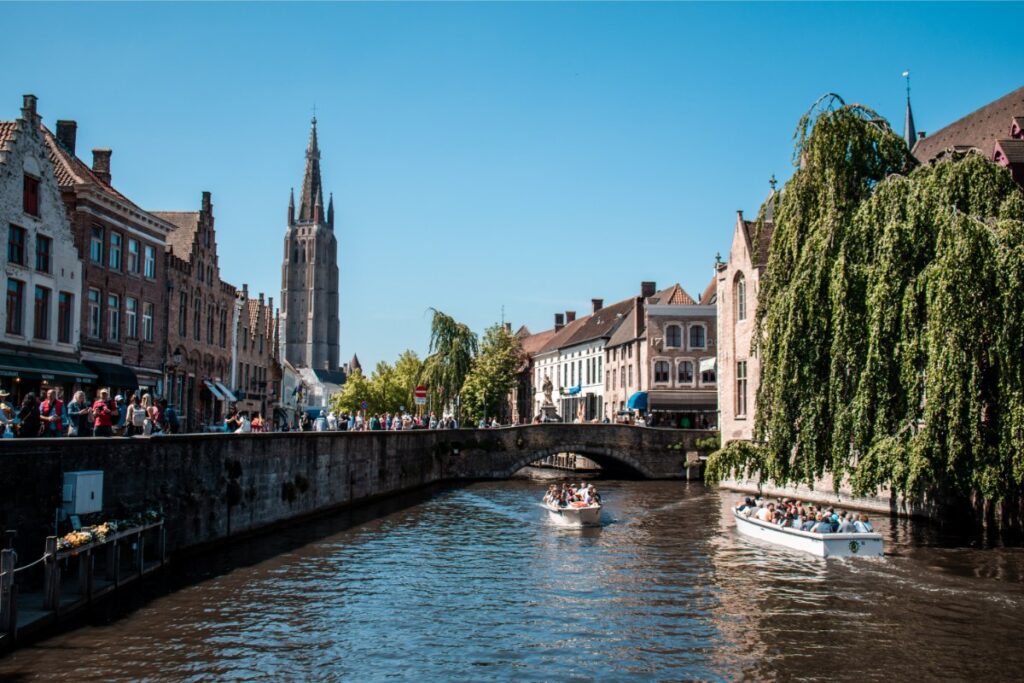
A canal tour is a must-do activity when visiting Bruges. The city is often referred to as the “Venice of the North” due to its many canals, which were once used for transportation and trade. Today, the canals offer a unique perspective of the city and its stunning architecture. There are several canal tour operators in Bruges, each offering different routes and experiences. Some tours are guided, while others are self-guided with an audio guide. The tours usually last about 30-40 minutes and take you through the heart of the city, passing by landmarks such as the Belfry Tower, the Church of Our Lady, and the picturesque bridges.
One popular tour is the one that departs from the Rozenhoedkaai, near the Belfry Tower. The tour takes you through the city’s historic canals and offers views of charming houses, cobblestone streets, and colorful flowers that line the waterways. Another popular tour is the one that takes you along the city’s outer canals and offers a quieter, more peaceful experience.
Visit the Basilica of the Holy Blood
The Basilica of the Holy Blood is another must-visit attraction in Bruges. It is a Romanesque-style church located in the Burg Square and is known for housing a venerated relic, the Holy Blood of Jesus. Legend has it that the relic was brought to Bruges by Thierry of Alsace after the Second Crusade. The basilica consists of two chapels, the lower and the upper chapel. The lower chapel is a typical Romanesque crypt and dates back to the 12th century. The upper chapel, which is the main attraction, was rebuilt in Gothic style in the 16th century. It is here that the relic of the Holy Blood is kept in a glass phial.
Visitors can view the relic and attend the daily Holy Blood procession, which takes place in the upper chapel. The procession involves the display of the relic and a reading of the Passion of Christ. Aside from the relic, the basilica is also known for its stunning stained-glass windows, ornate altar, and intricate wood carvings. Admission to the basilica is free, but there is a small fee to see the relic.

Wander the Market Square
The Market Square, also known as the Grote Markt, is the heart of Bruges and a must-visit destination for any tourist. Located in the center of the city, this historic square is surrounded by stunning medieval buildings, including the iconic Belfry Tower and the Provinciaal Hof.
Visitors can wander the cobblestone streets, admire the architecture, and soak up the lively atmosphere of the square. There are plenty of cafes and restaurants lining the square, making it an ideal spot to relax and people-watch.
The Market Square is also home to many of Bruges ’ seasonal events, including the Christmas markets and the famous Bruges Beer Festival. If you’re lucky enough to visit during one of these events, you can experience the true spirit of Bruges and its locals.

Admire the Art at the Groeningemuseum
The Groeningemuseum is a must-visit destination for art lovers in Bruges. This museum is located in the heart of the city, and it features a vast collection of paintings from the 14th century to the present day. Visitors can explore the museum’s many galleries, which showcase an impressive range of artwork, including Flemish Primitive art, Renaissance art, Baroque art, and much more.
Some of the most famous paintings in the Groeningemuseum include “The Last Judgment” by Hans Memling, “The Death of the Virgin” by Hugo van der Goes, and “The Madonna with Canon van der Paele” by Jan van Eyck. In addition to these renowned works, the museum also houses some lesser-known pieces by local artists. One of the most unique things about the Groeningemuseum is the way in which it traces the evolution of art in Brugge over the centuries. Visitors can see how the city’s artistic traditions have developed and changed over time, from the early Flemish Primitive style to the more modern works of the 20th century.
Visit the Bruges Beer Museum
The Bruges Beer Museum is a must-visit destination for beer lovers. Located in the heart of Bruges, the museum is dedicated to showcasing the rich history and culture of Belgian beer. Inside the museum, visitors can explore exhibits that cover the brewing process, the history of beer in Belgium, and the many different types of beer that are brewed in the country. The museum also offers tastings of some of the most popular Belgian beers, so visitors can experience the unique flavors and aromas for themselves.
In addition to the exhibits and tastings, the Bruges Beer Museum also hosts regular events and workshops, such as beer pairing dinners and brewing workshops. These events provide visitors with the opportunity to learn more about Belgian beer culture and connect with fellow beer enthusiasts.
Explore the Church of Our Lady
The Church of Our Lady (Onze-Lieve-Vrouwekerk) is a must-visit site in Bruges for those interested in art and architecture. The church is one of the tallest structures in the city, and its tower is visible from many points in Bruges. The church is also home to some of the most important works of art in Belgium. One of the most notable works of art in the church is Michelangelo’s Madonna and Child sculpture. It is the only Michelangelo sculpture to leave Italy during his lifetime. Other notable works in the church include a painting by Anthony van Dyck and several tombs of prominent Brugge citizens.
Visitors to the church can also climb the tower for spectacular views of the city. The climb is not for the faint of heart as it involves a narrow staircase with over 300 steps, but the view from the top is well worth the effort. The Church of Our Lady is open to visitors daily, although hours may vary depending on the season. Admission fees apply, but are reasonable and include access to both the church and the tower.

Take a Chocolate Tour
Belgium is famous for its chocolate, and Bruges is no exception. Taking a chocolate tour is a great way to experience the best that the city has to offer in terms of chocolate. There are many chocolate shops in Bruges, but taking a tour is a great way to learn about the history of chocolate making in Belgium, how chocolate is made, and the different types of chocolate. The tours usually take you to some of the best chocolate shops in the city, where you can taste different varieties and learn about the techniques used to make them.
Visit the Beguinage
The Beguinage is a beautiful and peaceful complex of buildings and gardens located just outside the historic center of Bruges. It was founded in the 13th century as a place of residence for a group of devout laywomen called Beguines, who lived in a quasi-monastic community.
Today, the Beguinage is a UNESCO World Heritage Site and is still home to a small group of Benedictine nuns who live in the white-washed houses around the tranquil central courtyard. Visitors are welcome to wander through the narrow streets and admire the picturesque architecture of the Beguinage, which includes a small church, a museum, and several charming gardens. The Beguinage is a lovely spot to escape the crowds of the historic center and enjoy a peaceful stroll. Be sure to take a moment to appreciate the serene beauty of the Beguinage’s tranquil setting, with its lovely gardens and tranquil ponds.

Check out the Windmills
There are 3 historic windmills that are still standing in Bruges: Sint-Janshuismolen, Koelewei Mill, and Bonne Chiere. Each of these windmills has a unique history and architecture, and they offer visitors a glimpse into the city’s past.
The Sint-Janshuismolen is located just outside the old city walls and is the only windmill in Bruges that still operates commercially, producing flour that is sold in the nearby shop. The Koelewei Mill is also located outside the old city walls and is the oldest surviving windmill in Bruges, dating back to 1765. The Bonne Chiere is located in the Sint-Pieters district of Bruges and has been fully restored, now functioning as a museum where visitors can learn about the history of windmills in the area. Visitors can take a short bus or bike ride from the city center to get to the windmills. Several guided tours are also available that take visitors to all three windmills and provide additional historical context.
Historium and Duvelorium
When visiting Bruges, be sure to immerse yourself in the captivating historical experience of the Historium. Step into the medieval era as you explore interactive exhibitions, wander through themed rooms, and witness the sights and sounds of 15th-century Bruges. Take a virtual reality journey and be transported through the city’s vibrant past.
After your historical adventure, indulge in the beer-lovers paradise at the Duvelorium. Nestled within the same building, this unique beer tasting room offers a wide selection of Belgian brews, including the renowned Duvel beer. Savor the flavors while enjoying panoramic views of Market Square from the terrace. The Historium and Duvelorium combine history, culture, and the vibrant beer scene, providing visitors with an unforgettable experience that truly captures the essence of Bruges.

Best places to eat in Bruges
De Vlaamsche Pot is a traditional Flemish restaurant located in the heart of Bruges. It offers a cozy atmosphere and serves up classic Flemish dishes like stoofvlees (beef stew) and waterzooi (a creamy fish or chicken stew). The restaurant also has an extensive beer menu featuring many local Belgian brews to pair with your meal. The staff is friendly and welcoming, and the prices are reasonable for the quality of food and experience. It’s definitely a must-try for those looking to experience traditional Flemish cuisine in Bruges.
‘t Zwart Huis is a unique dining experience located in a historic 16th-century building in the heart of Bruges. This restaurant has a warm and welcoming atmosphere and is known for its excellent Belgian cuisine and wide selection of local beers. The menu includes traditional Flemish dishes such as stoofvlees (beef stew) and waterzooi (chicken or fish stew), as well as fresh seafood and vegetarian options. The restaurant also has a charming outdoor terrace that overlooks the bustling city center. Overall, ‘t Zwart Huis is a great choice for a cozy and delicious meal in Bruges.
Gastrobar Hubert is a popular restaurant located in the heart of Bruges, serving up a modern take on traditional Flemish cuisine. The restaurant’s sleek and stylish interior provides a warm and inviting atmosphere for diners, while the open kitchen adds an element of excitement and energy to the dining experience. The menu at Gastrobar Hubert features a variety of dishes made with locally-sourced, high-quality ingredients. The restaurant is known for its creative and innovative approach to Flemish cuisine, with dishes such as Flemish beef stew with homemade fries, smoked eel with beetroot and apple, and rabbit with mustard sauce and turnip.
In addition to its food, Gastrobar Hubert also has an extensive wine list and knowledgeable staff who are happy to recommend the perfect pairing for your meal. With its excellent food, wine, and service, Gastrobar Hubert is a must-visit restaurant for anyone looking to experience the best of Bruges’s culinary scene.
De Stove offers a delightful dining experience with a focus on traditional Belgian cuisine. Located in the heart of Bruges, this family-run restaurant has been serving delicious dishes for over 35 years. Their menu features a variety of Flemish specialties, including hearty stews, succulent seafood, and delectable desserts. With an emphasis on using fresh, locally sourced ingredients, De Stove offers an authentic taste of Bruges. Don’t miss the opportunity to savor their signature dishes while enjoying the charming atmosphere of this local gem.
When to go
The best time to visit Bruges is during the months of April to September, especially in the summer months of July and August, when the weather is mild and pleasant. However, keep in mind that this is also the peak tourist season, and the city can get crowded with tourists.
If you prefer to avoid the crowds, then consider visiting during the shoulder seasons of spring (April to May) or autumn (September to October), when the temperatures are still comfortable, and the tourist numbers are fewer.
Winter in Bruges can be chilly, with temperatures ranging from 0-8°C (32-46°F), but it can also be a magical time to visit, especially during the Christmas season when the city is beautifully decorated and lit up with festive lights. Ultimately, the best time to visit Bruges depends on your personal preferences and interests.
Bruges Travel Guide FAQ — Everything you need to know
Around €16 adults (weekday winter: ~€15). Open 9:30 am–6 pm, last entry 5 pm. 366 steps, no elevator. Book online at museabrugge.be.
€12 adults / €7 children (3–12), fixed city tariff, same at all 5 departure points. Buy at the dock; no advance booking is available for standard 30-minute tours. Rozenhoedkaai has the best backdrop (and longest queues). Runs 10 am–6 pm daily.
The basilica itself is free to enter. The treasury museum costs €2.50. Relic veneration is daily from 14:00 to 16:00 (Fridays also from 10:15 to 11:00). Note: you cannot photograph the relic. The annual Procession of the Holy Blood (May) is one of Belgium’s greatest events.
In the Church of Our Lady (Onze-Lieve-Vrouwekerk), the Madonna and Child (1501–02) is one of only a few Michelangelo sculptures outside Italy, purchased by a Bruges merchant during his lifetime. Church entry is free; the museum section, including the sculpture, costs ~€8–10 adults.
Yes, if planning a full 2 days. The 48h card (~€55) covers Belfry (€16) + Groeningemuseum (€14) + Church of Our Lady museum (€10) + canal tour (€12) + De Halve Maan brewery tour (€16) = €68 in individual tickets.
By train from Brussels-Midi or Brussels-Central: ~1 hour, trains every 30 minutes, from ~€15 one-way. From Ghent: ~30 minutes, from ~€8. Bruges is one of Europe’s easiest and most rewarding day trips, but staying overnight lets you experience the city after the crowds leave.