Germany, the country for every kind of traveller! It is famous for its vibrant cities, bustling with life and intense rhythms. It is also famous for its stunning architecture, historic cathedrals, and medieval castles. In terms of nature, its dense forests and mountains steal the show. Don’t miss out on their delicious beers and food. It is still one of the biggest economic powers in Europe and has the third largest car production in the world (Mercedes-Benz, BMW, and Volkswagen). In our complete travel guide, you will find all the information you need before your first trip to Germany.
| Capital | Berlin |
| Population | ~84 million |
| Language | German |
| Currency | Euro (€) |
| Plug type | C / F — same as most of Europe |
| Voltage | 230V / 50Hz |
| Entry (EU/Greeks) | ✅ ID card sufficient |
| Entry (US/Canada/Australia) | ✅ No visa — 90 days Schengen |
| Deutschlandticket | €63/month — unlimited local/regional transport nationwide |
| Berlin single ticket | €4 (from Jan 2026) |
| Neuschwanstein Castle | ~€15, book at hohenschwangau.de months ahead |
| Oktoberfest | Mid-Sep to early Oct — book Munich accommodation 4–6 months ahead |
| Christmas markets | Late Nov–Dec — 3,000+ markets nationwide |
| Best time | May, Sep–Oct |
| Flights | 👉 Skyscanner |
| Accommodation | 👉 Booking.com — Germany |
| Tours & activities | 👉 GetYourGuide — Germany |
| Car rental | 👉 Discovercars.com |
| eSIM Germany | 👉 Airalo |
Where to Stay in Germany — Costs
Germany offers excellent value vs. most Western European countries, though Munich is significantly more expensive than Berlin:
Berlin — the most affordable major capital in Western Europe:
- Hostel dorm: €20–35/night
- Mid-range hotel: €80–130/night
- Luxury: €150–400/night
Munich:
- Hostel dorm: €35–50/night
- Mid-range hotel: €110–170/night
- Oktoberfest (mid-Sep to early Oct): prices triple → book 4–6 months ahead
Hamburg:
- Mid-range hotel: €80–150/night, good value waterfront
East Germany (Dresden, Leipzig, Weimar): 20–30% cheaper than Western cities across all categories
Rural Germany (Bavaria, Black Forest, Rhine Valley): Traditional Gasthöfe and Pensionen (guesthouses): €50–120/night, often include breakfast, tremendous character
Browse Germany accommodation on Booking.com
For the most part, it is preferable to book rooms as centrally as possible, at points of interest. Some more remote hotels may be more economical, but usually the difference in the money one saves ends up being spent on transport plus wasted time. The above searches have been made on scattered dates throughout the year. The criterion was a double room for couples.
Traditional Food
German cuisine may not be particularly popular worldwide, but several traditional recipes are no match for more well-known cuisines. They are primarily for meat lovers and beer lovers. Something you will see from the first hours you are in their country. Below we will list some must-try dishes you should try when you are there.
Rouladen: A typical German dinner, often served with potato dumplings, red cabbage, and gravy. It can also be served with vegetables or mashed potatoes. The rolls consist of thin slices of beef wrapped around bacon, pickles, onions, and mustard before being cooked with red wine. It’s a relatively time-consuming dish, but it’s definitely a traditional dish worth trying.
Sauerbraten: It is a traditional German food that takes a lot of time to prepare. It is made with meat, which is cooked slowly in the oven for hours until it is soft and tender. It is usually served with potato dumplings, boiled potatoes, or spätzle, Rotkohl (red cabbage), and gravy.
Spätzle: It is a type of pasta and is usually served as a side dish, and can also be accompanied by cheese.
German sausages: There are several varieties, with the most well-known being Currywurst, Bratwurst, Frankfurter, Weisswurst, Nürnberger Rostbratwurst, Blutwurst, and Landjäger.
Jägerschnitzel: The Schnitzel comes from Austria, but it is still considered a traditional German food and can be found in most restaurants in the country. One of the most common German variations is the Jägerschnitzel, which is a schnitzel with mushroom sauce, often served with potatoes or sauerkraut.
Schweinshaxe: Also known as pork knuckle. It is one of the most traditional dishes in Germany, especially in the Bavarian region. It is usually served with potatoes and some kind of cabbage. The meat is marinated for days before it is finally cooked at low temperatures for several hours
Kartoffelpuffer: French fry pancake, which can be served with eggs for breakfast, but also with applesauce and sour cream.
Maultaschen: A type of pasta dough, which is filled with meat, spinach, onions, and various herbs and spices.
Eintopf: There are many regional versions of Eintopf, but it is usually made with a variety of vegetables and some kind of meat. It is essentially the German stew. The meaning of the name refers to the way the ingredients are cooked in a pot rather than a specific recipe.
Brezel: The German Brezel, known internationally as a pretzel, is a type of baked bread with salt. It is one of the most traditional snacks in Germany, and you can find it freshly baked in any bakery and or small pretzel shops around the country.
Read our article about Austria
Getting around Germany — Transportation Guide
🚄 Long-distance trains (Deutsche Bahn ICE/IC): Germany’s high-speed rail network is world-class. Key routes:
- Berlin → Munich: ~4 hours (ICE), from ~€30–99 advance / up to €200 walk-up
- Frankfurt → Berlin: ~4 hours, from ~€25 advance
- Frankfurt → Munich: ~3.5 hours, from ~€20 advance
Book at bahn.de, prices are lowest 3–6 months ahead (Sparpreis tickets). FlixBus is a cheaper but slower alternative for many routes.
🚌 Deutschlandticket: The Deutschlandticket (€63/month from January 2026, up from €58 in 2025) is a monthly subscription giving unlimited travel on ALL local and regional public transport throughout Germany, like buses, trams, U-Bahn, S-Bahn, and regional RB/RE trains in every city and state. For visitors planning several weeks in Germany and using city transport daily, one month’s Deutschlandticket pays for itself quickly.
⚠️ Important: Deutschlandticket is NOT valid on long-distance ICE, IC, or EC trains; those require a separate ticket. It IS valid on S-Bahn, U-Bahn, trams, and regional trains.
In Berlin:
- Single AB ticket: €4 (rose from €3.80 Jan 2026)
- Day ticket (AB zone): ~€10
- Berlin WelcomeCard: transport and museum discounts, from ~€24/2 days
In Munich:
- Single ticket (inner zone): ~€4
- Day ticket (inner zone): ~€9
- Average 4% price increase across Munich transport from Jan 2026
Car rental: Ideal for the Romantic Road, Black Forest, Bavaria, Rhine Valley, and rural regions. Autobahn has no general speed limit on most sections. Compare prices and cars on Discovercars.com.
What to do in Germany
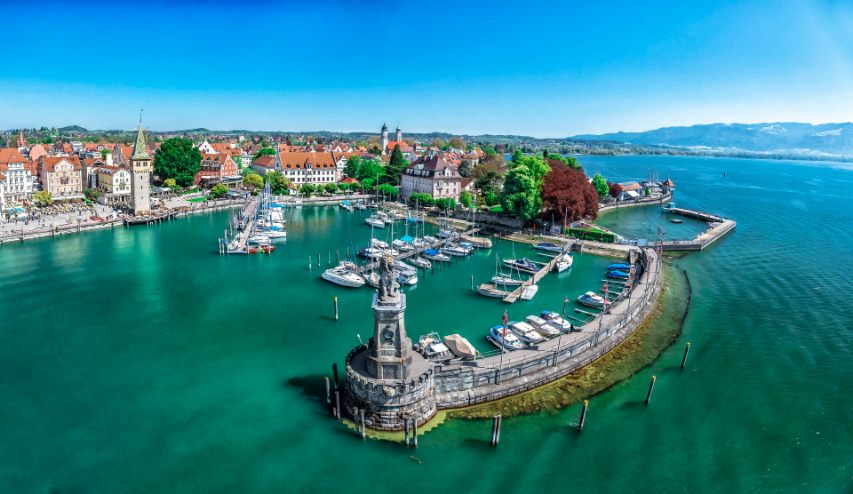
Lake Constance
Located along the country’s southwestern border with Switzerland and Austria, Lake Constance is the largest freshwater lake in Germany and the third largest in Central Europe. The area around the lake and in the Rhine Valley has a very mild climate and fertile soil, making it the country’s most important region for wine and fruit production. A suitable place for peace and relaxation.
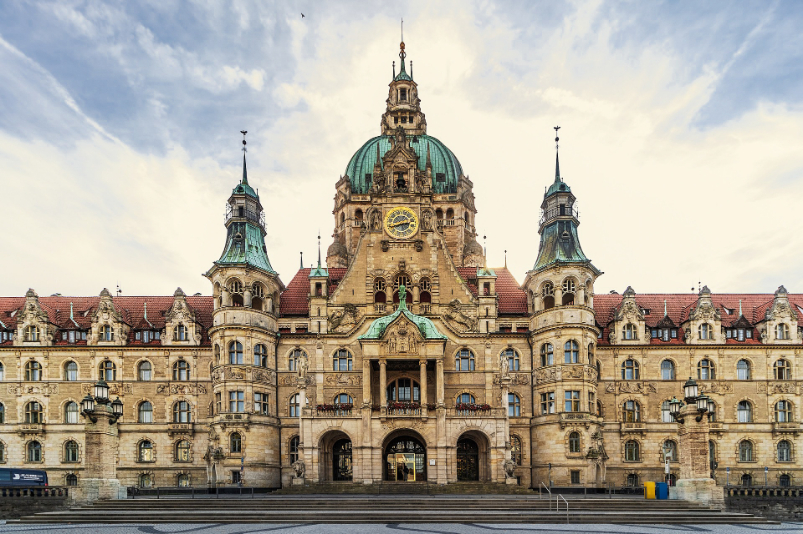
Hanover
Hanover is not a typical European city. Do not expect to see beautiful and modern buildings. This city was hit hard during World War II, leaving it with only a few historical landmarks. This area is surrounded by grey buildings from the 1950s that give a somewhat heavy atmosphere to the streets. But what attracts most people to Hanover are the large green areas, with forests and large parks, the Leine River running through the city, and the Sprengel Museum. It doesn’t have much tourism, but it is considered to be one of the most underrated destinations in Germany.
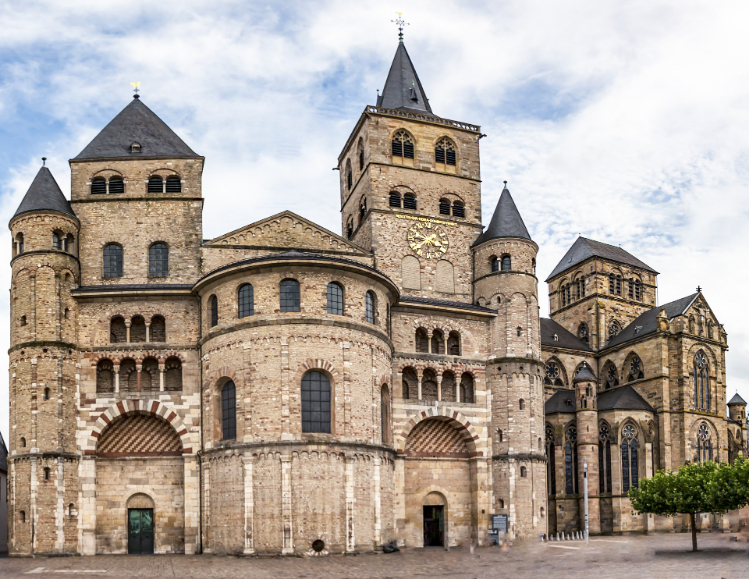
Trier
The oldest city in the country. With a history of 2000 years, Trier was founded by the Romans and contains many well-preserved Roman structures. Landmarks such as the Porta Nigra gate, the ruins of Roman baths, an amphitheatre just outside the centre, and a stone bridge over the Moselle river.
Dresden
Explore the treasures and grand buildings of this baroque city, divided by the majestic Elbe River. This city was completely rebuilt after the war. Today, it is an attraction for young people, as far as the city’s nightlife is concerned.

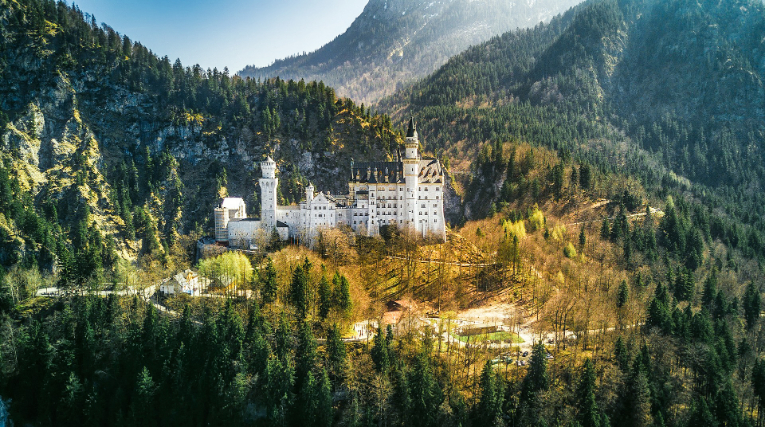
Neuschwanstein Castle
One of the largest castles in Europe and one of the most important tourist attractions in the world. It was built for King Ludwig II between 1869 and 1886. The palace is also known as Sleeping Beauty Castle because it was used by Disney. This much-photographed castle is located near the village of Hohenschwangau and the town of Füssen, next to the Austrian border in Bavaria. Information about access to the castle, hours, prices, and what you can see inside can be found at neuschwansteintickets.com.
Munich
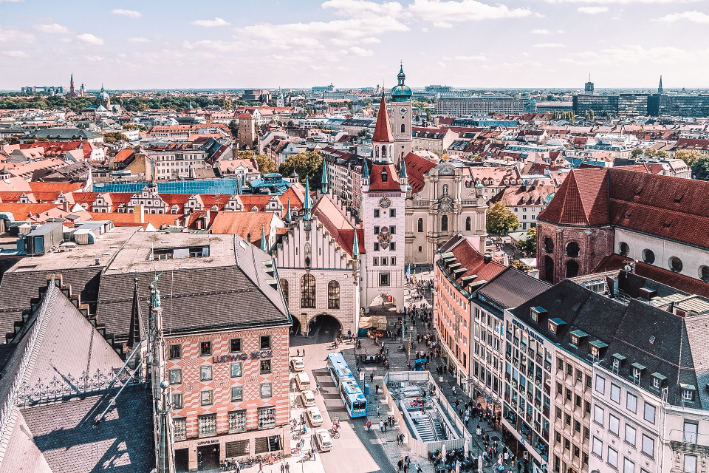
One of the reasons why this city is famous is the most famous German festival. Oktoberfest lasts 2 weeks and is considered one of the world’s biggest beer festivals. It starts in September and ends on the first weekend of October. Plenty of beers and an introduction to Bavarian culture, with this meaning: music, dancing, and food! The festival takes place in the large open-air square Theresienwiese. Outside the festival, it is still worth walking through the Marienplatz, the city’s main square. There you will find some of the city’s most important sights, such as the imposing neo-Gothic Neue Rathaus (New Town Hall) and the famous town hall clock, the Glokenspiel.
Crowds gather around the perimeter to watch the shows that take place, starring the clock statuettes. For football fans, a visit to the impressive Allianz Arena is a must, while for car enthusiasts, a visit to the BMW building is a must. Finally, for adrenaline lovers, there is the possibility to approach Germany’s highest mountain. The Zugspitze at a distance of about 120 km from Munich. You can either climb it via a hiking trail, or even easier via cable car or train. Don’t miss the view from the impressive AlpspiX viewing platform. More information about routes and costs can be found on zugspitze.de.
Bremen
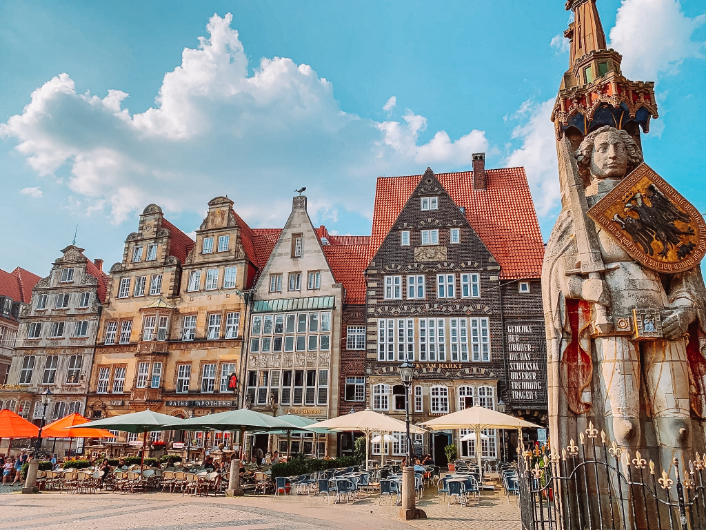
One of the 38 UNESCO World Heritage Sites in Germany. Bremen is a beautiful city with impressive architecture. The city’s magnificent City Hall and the character of the Roland statue in the historic Marktplatz are part of the unique World Heritage Site under UNESCO protection. They show the citizens’ will for independence since 1404. With its back to the town hall and overlooking the Liebfrauenkirchhof, the bronze statue of the Bremen Musicians, designed by Gerhard Marcks, is presented in front of you.
The statue is well-known from the Grimm brothers’ fairy tale of the same name. It is said that whoever touches the legs of the donkey can make a wish. A few meters down from the statue of the Musicians of the City, on the west side of the town hall, you can find the entrance to the oldest wine cellar in Germany. Fine spirits have been produced since 1409. With 650 different varieties of wine, it is considered the most extensive collection of German wines. Best of all, you can visit all of these attractions in just one day.
Berlin
The capital of Germany could not be missing from our list. You can start your tour from the famous Alexanderplatz, where the famous TV Tower is located. Visit the Pergamon Museum (on the so-called Museum Island on the Spree River) with its impressive exhibits and the German Historical Museum in the Zeughaus. The city’s landmark, however, is the famous Brandenburg Gate on Pariser Platz. A short distance from the Brandenburg Gate, you can find the Holocaust Memorial, dedicated to the memory of Europe’s murdered Jews. Be careful not to climb on the memorial’s slabs for photographs because it is forbidden.
A highlight of the city for film lovers is the Berlin International Film Festival, also known as the Berlinale, in February. The city is also home to the internationally renowned Madame Tussauds wax museum. For nightlife lovers, the parties at the famous Berghain cannot be missed, which, among other things, is famous for the difficult entrance that you have to pass through to avoid being turned away at the door. Multi-day parties and plenty of drinking to test your stamina. Finally, you can visit the city’s parliament and climb its dome, enjoying the panoramic view of the city.
Read our ultimate Berlin guide

Hamburg
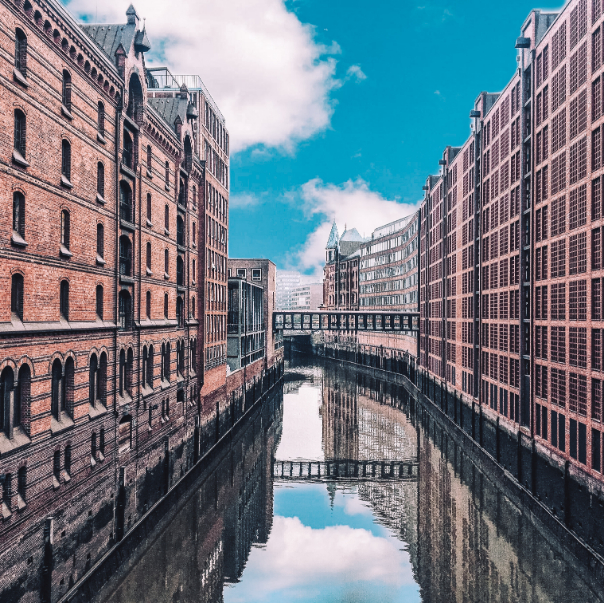
Hamburg is the second-largest city in northern Germany. Several waterways run through the city centre. Hamburg has more bridges than Amsterdam and Venice. It boasts one of the largest harbours, and the Reeperbahn is the heart of Hamburg’s nightlife, with many bars and one of the largest Red Light Districts in Europe! It is also the place where the well-known band The Beatles started. It is also worth visiting St. Paul’s area and spending time in the harbour.
Hamburg is known for the Fischmarkt (fish market), which is a meeting place for locals and tourists and started in 1703 to sell the freshest fish, flowers, and spices. If, on the other hand, you want something classic, you can stay in the city centre with its elegant neoclassical town hall and the nice shopping street of Mönckebergstraße. As far as children are concerned, Hamburg is definitely a key destination. In the city, there is the Miniatur Wunderland, which is the world’s largest miniature exhibition. You can find miniatures of everything from the Colosseum and St. Peter’s Basilica to Las Vegas and the Swiss Alps. The most popular of all is Hamburg Airport, where every few minutes there is a re-enactment of a Lufthansa aircraft taking off.
Heidelberg
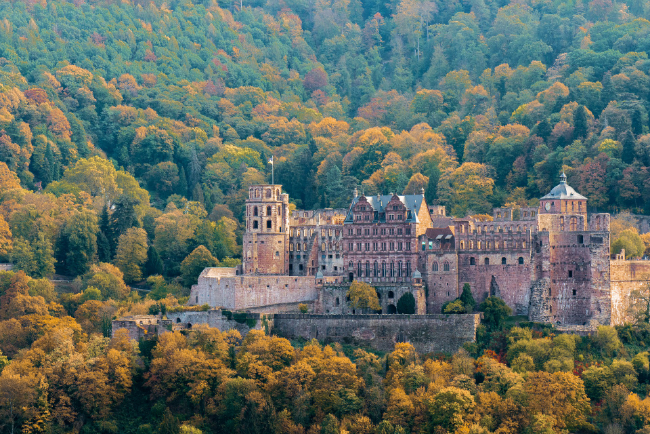
Heidelberg is one of the most romantic cities in Germany, thanks to its picturesque riverside location, beautiful old buildings, and bridges. It attracts almost four million visitors every year. The city is full of historical sites and attractions and offers excellent dining and entertainment experiences to visitors. Heidelberg is located at the point where the Neckar River rises from the hills of the Odenwald into the Rhine Valley. It is also one of the warmest places in Germany, as evidenced by its almond, fig, and olive trees, as well as its wild African parakeets. Don’t miss a stroll through the beautiful old town and the bridge to enjoy the views from Philosophers Way and the charming Heiligenberg.
Frankfurt
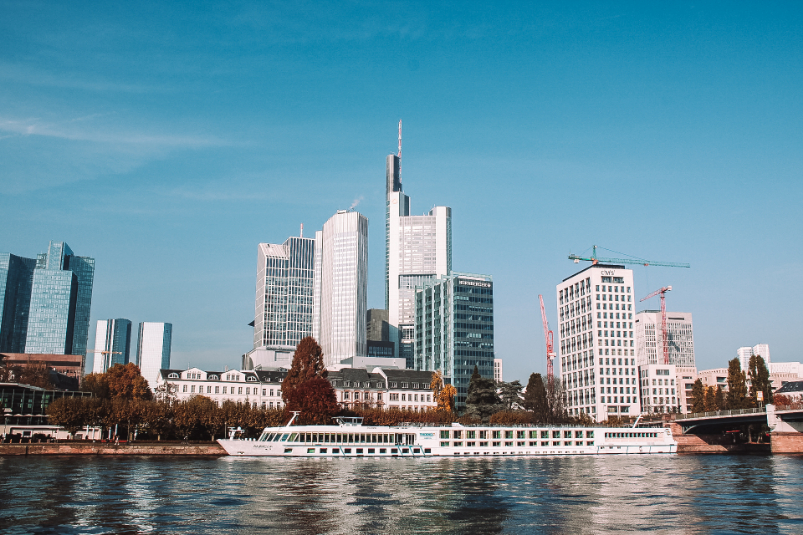
Thanks to its international airport, Frankfurt is the largest travel hub for Germany. Many tourists usually just wait for their connection and leave immediately. However, if there is time, it is definitely worth the visit. Frankfurt is a city that was largely destroyed in World War II. It is the financial centre of the country with its own stock exchange (Deutsche Börse) and modern skyscrapers. Its central tower is the only multi-storey building open to the public and offers unrivalled panoramic views of the city. If you are looking for something traditional in this modern forest, you can explore the reconstructed city centre of Römerberg in Frankfurt, which hosts many important events and conferences, such as the International Book Fair in October. It started in 1949 and is the largest book fair in the world.
Packing Tips & When to Go
Most of the country is characterised by a temperate climate with seasonal variations. Winter temperatures are low, and summers are cool. Generally, because there is a big difference in weather depending on where you travel within the country, you need to plan accordingly. Below we list some basic things to bring with you.
Sunglasses: Ideal for most summer days in Germany, especially for those who spend a lot of time outside. Useful even in the winter months for those who choose a winter sport.
Waterproof shoes & clothing: Whether you’re trying out some hiking trails or just want to enjoy walks in the cities, you’ll definitely want to stay dry. Waterproof clothing and shoes are essential, as even in the summer or spring, you may get caught in some rain.
Power bank: Whether you are doing some hiking activity or just touring, you don’t want to run out of battery either in your phone or in your photography equipment.
Hiking gear: It is advisable to have the basics such as a waterproof backpack or waterproof gelatin, esothermics, a sleeping bag, and hiking boots. The reason is to avoid incurring additional rental or purchase costs there.
The best months to visit Germany are May, September, and October. In May, everything is in bloom, and the temperature is ideal for excursions. Tourism is at reasonable levels, so you can do your activities comfortably and at better prices. September and October are 2 more popular months to visit, as the annual Oktoberfest beer festival takes place in Munich at that time, as does the Berlin Festival of Lights.
In general, most people choose the summer months due to more favourable conditions. They enjoy outdoor activities, festivals, and even picnics in the parks. However, prices in that period are higher. If you want to get even lower prices, you can put Germany on your itinerary during the winter months. The temperatures are quite low, however, the Christmas spirit that prevails in several cities such as Berlin, Dresden, and Munich is well worth the visit, (and so is the mulled wine or glühwein)!!!
Useful Words
The official language in Germany is obviously German. However, you won’t have any problems communicating, as most people have a good command of English. Below we list some basic words in German:
| Yes | Ja | Good Morning | Guten Morgen |
| No | Nein | Good night | Gute Nacht |
| Hello | Hallo | Good Bye | Auf Wiedersehen |
| How are you | Wie gehts | Thank you | Danke! |
| My name is.. | Ich heiße … | You’re welcome | Bitte! |
Germany Travel Guide FAQ — Everything you need to know
EU citizens (including Greeks): ID card sufficient, no visa needed. US, Canadian, Australian, and UK citizens: no visa, 90-day Schengen rule.
The Deutschlandticket (€63/month from January 2026) gives unlimited travel on all local and regional public transport throughout Germany, buses, trams, U-Bahn, S-Bahn, and regional trains in every city. For visitors staying 2+ weeks and using city transport daily, it likely pays for itself. NOT valid on long-distance ICE/IC/EC trains.
Book at hohenschwangau.de, the only official source. Ticket: ~€15 (includes guided tour, the only way to see the interior). Book months ahead in summer; slots sell out 2–3 months in advance. Third-party sites add significant markups. Day tours from Munich, including transport available at GetYourGuide.
Oktoberfest runs from mid-September to early October. Munich accommodation during this period doubles or triples in price; book 4–6 months ahead. Entry to the grounds is free; only food, beer, and rides cost money.
Berlin (Brandenburg Gate, Wall Memorial, Museum Island, note Pergamon closed), Munich (Marienplatz, English Garden, Hofbräuhaus), Neuschwanstein Castle (~€15, book ahead), Oktoberfest (mid-Sep–Oct), Cologne Cathedral (free), Hamburg Speicherstadt, Romantic Road, German Christmas markets (Nov–Dec). Browse more on GetYourGuide Germany.