The Netherlands! A country known for its characteristic windmills, vast areas of tulips, and picturesque canals. However, the real reason why Holland is worth visiting is its culture. The Dutch are some of the most relaxed people you will ever meet. They like to talk, drink, go to festivals, and generally live their lives. A lifestyle that you will definitely envy compared to our own rhythms and stress. Below you will find all the information you need before your first visit to the country.
| Capital | Amsterdam (government seat: The Hague) |
| Population | ~17.9 million |
| Language | Dutch |
| Currency | Euro (€) |
| Plug type | 12.5% of the room rate (on top of VAT) |
| Voltage | 230V / 50Hz |
| Entry (EU/Greeks) | ✅ ID card sufficient |
| Entry (US/Canada/Australia) | ✅ No visa — 90 days Schengen |
| ETIAS | Expected late 2026 — not yet active |
| Rijksmuseum | €25 (under 19 free) — book online |
| Van Gogh Museum | €25 (under 18 free) — online only |
| Anne Frank House | ~€16 — online only, book months ahead |
| Zaanse Schans | ~€17.50 entry fee (new from spring 2026) |
| Keukenhof 2026 | Open Mar 19 – May 10 — book in advance |
| Amsterdam transport | OVpay (tap card) or GVB multi-day pass |
| I Amsterdam City Card | From €67/24h — 70+ attractions + GVB transport |
| Best time | Apr–May (tulips) & Sep–Oct |
| Flights | 👉 Skyscanner |
| Accommodation | 👉 Booking.com — Netherlands |
| Tours & activities | 👉 GetYourGuide — Amsterdam |
| eSIM Netherlands | 👉 Airalo |
Where to stay in the Netherlands — Costs
Amsterdam:
- Hostel dorm: €35–60/night. Low-cost hostels in the Netherlands can be found on HostelWorld.com.
- Budget hotel / private room: €80–120/night
- Mid-range hotel: €120–250/night (shoulder) / €180–350 (summer peak)
- Luxury: €300–800/night
Outside Amsterdam (much more affordable):
- Haarlem (19 min by train): 20–30% cheaper than Amsterdam
- Leiden, Utrecht, Rotterdam: 25–40% cheaper
- Tourist tax in Rotterdam: ~€3–4/night vs €12.5% in Amsterdam
Browse Netherlands accommodation on Booking.com
PERSONAL FACT: For us personally, our trip started with a bit of bad luck. While we had already booked a room 3 months before our arrival in the Netherlands, a month before we were cancelled for unclear reasons ( luckily no money was withheld). As a result we could not find available rooms as it was Christmas and we ended up paying 480€ for a room, literally 10m² outside the centre! Still we had an incredible time in Amsterdam!!!
Traditional Food
The Netherlands is not particularly renowned for its cuisine like other European countries. However, there are some recipes that only need to be enjoyed once. We personally fell in love with stroopwafels and searched for them frantically, even on our return to Greece. Below we list some traditional recipes that you can try during your trip to the Netherlands.
Poffertjes: They are small fluffy pancakes made with yeast and flour. They are usually served with icing sugar and syrup, but there are several alternative toppings such as syrup, whipped cream and strawberries. You can find them in sweet shops, as well as in flea markets. An alternative to Poffertjes are the well-known Churros which also come with various toppings, icing sugar and various flavoured syrups.
Bitterballen: You can find it in almost every café and bar in the cities. Most people take it as a side dish with their beer. These little fried balls are meat-based, fried and served with mustard. The filling inside can have several variations, just be careful not to eat it too soon, as the filling inside is usually quite hot at first.
Stroopwafel: This sweet snack is a unique type of biscuit, which is made from two thin layers of dough with a syrup filling. You can find packages in almost every grocery store and bakery in the Netherlands, as well as fresh at flea markets. We, as mentioned above, loved them and had them as a daily snack!!!
Read our full article on Italy
Patat: The Dutch version for chips or French fries. Alternate names are also the following words: “Friet”, “Frites”, “Patat” and “Vlaamse frieten”. They are larger and crispier than normal French fries and were invented in the north of Belgium. The Dutch love them and accompany them with several toppings such as mayonnaise, tomato ketchup, curry or peanut sauce. There are also patatje oorlog (war), a combination of peanut sauce, mayonnaise and onions. Patat are usually served in a paper cone or box. You will find them everywhere in the cities and at many flea markets or festivals from street vendors.
Olliebollen: Dutch recipe traditionally eaten on New Year’s Eve, at local markets and festivals, like the potatoes mentioned above or churros. These fried balls of dough are similar in taste to a cake and often have raisins added to the dough. Oliebollen are usually served warm with icing sugar.
Hollandse nieuwe haring: The herring is cleaned of the giblets immediately after being fished on board. Dutch herring is traditionally eaten whole, holding the fish by the tail. If this doesn’t look too familiar, you can eat it in small bites or in a sandwich called Broodje Haring.
Erwtensoep: a soup recipe with peas, quite thick and with lots of vegetables such as onions, potatoes, celery and different kinds of pork and smoked sausage, which is added just before serving. It is usually accompanied by rye bread, along with smoked bacon, cheese and butter. Traditionally eaten on New Year’s Day, it is also an ideal dish for a cold day.
Kroket: When it comes to snacks though, no one can beat the Dutch! Kroket is a roll with ragout meat inside, covered with sesame seeds. The original Dutch kroket is made from beef, but there are many different flavours such as chicken, shrimp, goulash or even vegetarian. You can try it as a snack, but most of the time it is served on sliced white bread or hamburger buns with mustard on the side. Be careful because the inside can be quite hot. You can buy it almost everywhere in Amsterdam such as snack bars, cafes and restaurants.
Getting Around the Netherlands — Transport Guide
Trains (NS — Nederlandse Spoorwegen): The Netherlands has one of the world’s most extensive train networks, and almost all major cities are within 1 hour of Amsterdam. Fast, frequent, and reliable.
- Amsterdam → Rotterdam: ~70 min, ~€15–20
- Amsterdam → The Hague: ~55 min, ~€13–17
- Amsterdam → Utrecht: ~30 min, ~€9–12
- Amsterdam → Haarlem: ~19 min, ~€5–7
- Amsterdam Centraal → Schiphol Airport: ~17 min, ~€5.60
Check schedules and book at ns.nl
In Amsterdam (GVB trams, buses, metro, ferries):
- OVpay (easiest for visitors): Tap your contactless bank card or phone on tram/bus/metro readers. Boarding fee: €1.16 + €0.217/km. No ticket needed. Check the daily cap.
- GVB 1-day pass: ~€8.50 / 2-day: ~€14 / 3-day: ~€21.50 — unlimited trams, buses, metro and ferries within Amsterdam. Does NOT include Schiphol airport or regional buses
- Amsterdam Travel Ticket: City transport + airport train/bus — from ~€20/day
- Amsterdam & Region Travel Ticket (ARTT): City + airport + Keukenhof + Zaanse Schans + Haarlem + Zandvoort — from ~€23/day. Best for day-trippers.
- GVB ferries: Free, cross the IJ river to Amsterdam Noord
Bike rental: The Netherlands is the cycling capital of the world, and Amsterdam has more bikes than people. Rental from ~€12–18/day from MacBike or StarBikes. The most authentic way to experience the city.
Taxis: More expensive, use Uber or Bolt instead. Starting charge ~€7.50, but apps are cheaper.
Train/bus timetables can be found on Omio.com
Car rental: Quick and direct transport to the places you want to go. You will hardly encounter heavy traffic, as many people use their bicycles in the cities. The most suitable means to plan your tour between different cities, just the way you want. For availability and prices, see on Discovercars.com.
What to do in the Netherlands
Amsterdam
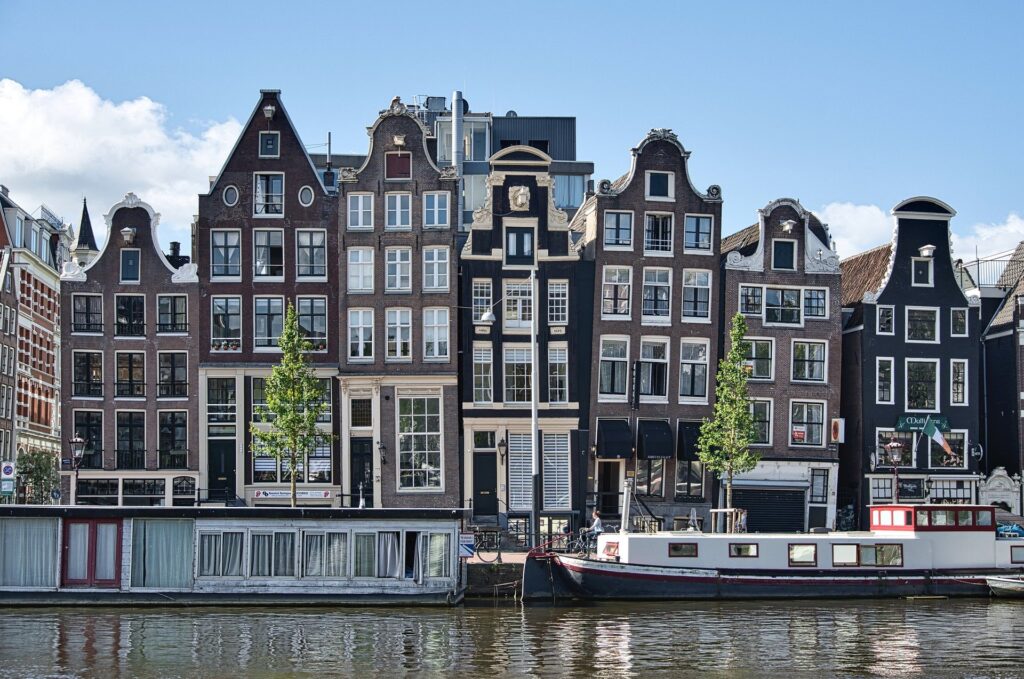
The top destination for first-time visitors to the Netherlands. It has many beautiful canals and is perfect for a lovely relaxing morning or afternoon. You can take a ferry ride or walk along the banks of the canals to enjoy the beautiful views of the city. Another way to see Amsterdam is of course by bicycle, the main mode of transport for locals.
Art lovers will love the van Gogh museum. It has the largest collection of van Gogh paintings in the world and you can either book a private guided tour or tour it yourself. Beyond the canals and the arts, many people visit the capital for the freedom and relaxed pace of the city. Visiting the city’s famous coffee shops is a unique experience in itself. The menu includes various varieties of cigarettes and drinks, as well as the famous space cakes.
In the centre still the three well-known entertainment areas are the popular Red Light District with girls showing off their ware in respective street windows and the Rembrandtplein and Leidseplein areas. On the outskirts of Amsterdam, however, are some of the best places for clubbing in the world.
Book your in-city rides on WelcomePickups.com
Rotterdam
The country’s second largest city and its most important port. You can visit the old harbour which has a special atmosphere and entertainment. You will be confronted with a different aura from the rest of the city. It reminds you of something from another era! You will find historic ships and a mixture of old houses and modern design at the same time which is the characteristic of the city.
On the other hand, a visit to the ultra-modern Europoort port is also a must to see the real thing. You can opt for a boat tour to see this industrial masterpiece as well as visit the Maritime Museum. For food, coffee or just a stroll one of the most suitable places in the city is the Markthal (Market Hall). It is a building with an impressive design ahead of its time and its space is decorated with an interesting pattern of flowers, insects, fruits and other plants. For those who love activities and more extreme situations, you can try to do Zip-line. From May to September at the Euromast tower you can attempt to zip-line the fastest zip-line in all of Europe! The tower is also open outside of these days for views of the entire city from the tallest building.
One of Rotterdam’s most distinctive sights is the interesting and eccentric cluster of yellow cube-shaped houses. There although some people are surprised, there are people living inside this special construction. The Erasmus Bridge, also known as the Erasmusbrug, is another timeless symbol of the fantastic city of Rotterdam and is the second longest bridge in the entire country. You can finally easily escape from the urban part of the city by taking a stroll through Het Park, amidst its green spaces and lakes. During the summer season, many locals have barbecues on the park’s grass.
For a neighbor road trip, read our Belgium travel guide

The House of Anne Frank
It is one of the most popular museums in the Netherlands. It is located on the canal Prinsenegracht in Amsterdam. The museum is based on the personal story of the little girl, who became famous after her death from her diary. There she hid with her family and other Jews in a hidden room in her house for about 2 years until they were discovered and taken to the Nazi concentration camps. In particular, at the entrance to the second floor there is a mobile library with which they hid the entrance to the shelter. The tour of the house gives you the opportunity for a hands-on experience.
Utrecht
Utrecht is a city quite close to Amsterdam which we also visited by train. The big plus of the city is that it combines the variety and life of the Dutch metropolis with the friendly vibes of the countryside at the same time. It’s a picturesque city with traditional beauty like the capital, but without as much tourism.
It is the 4th largest city in the Netherlands in terms of size and the largest university city in the country. Its large network of pedestrian walkways will help you see most of the city on foot. Utrecht also has its picturesque canals with the added bonus of being the only ones that have built-in docks. In the city’s main canal, the Oudegracht, you can see that there is a separate level almost on the same surface as that of the water.
This is where ships used to unload various goods from all over the world to be stored on the docks afterwards. These warehouses, which are still there, have been renovated and are now used as shops, bars and restaurants. The historic centre of the city still steals the show. There is also the tallest ecclesiastical monument in the country with a height of 112m which is the Dom bell tower.

Zaanse Schans
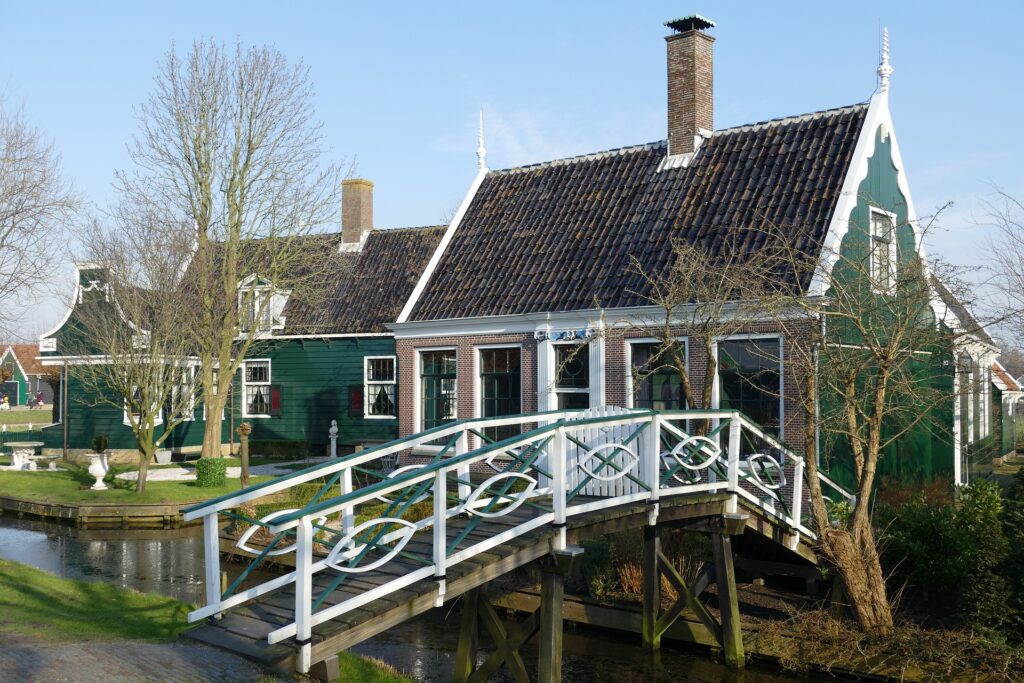
A village a stone’s throw from Amsterdam. You can get there either by train or bus in less than an hour. It is known for its collection of well-preserved historic windmills and houses. From 1961 to 1974 old buildings from all over the area were relocated using special trailers. Zaanse Schans is located next to the de Zaan waterway, making the area particularly suitable for exploring by boat. There are several companies that offer and undertake boat tours.
Eindhoven
It is a city that not many people choose as their final destination in the Netherlands. However, there are quite a few things to see in Eindhoven.
First of all, since the bicycle as a means of transportation is predominant in the Netherlands, you could take a special ride this time. You can cycle through van Gogh’s Starry Night. A local artist chose a unique and beautiful way to honor the famous painter. He created a bike path that glows in the dark! The famous painting has come to life in Eindhoven in the form of the Roosegaarde bike path, created with stones that reflect sunlight. When fully charged, the self-illuminated path gives off a light that references the colour tones of the painting in a striking way.
In the city you will also find the strange Evoluon exhibition centre which on the outside strongly resembles a UFO. Many people gather around the perimeter of the building to have their pictures taken. More information can be found on Evoluon.com.
You will also come across the museum of the famous Philips company. Eindhoven owes its existence to this company whose family chose the then small village to found their company. Finally, you can do your shopping in the main Martk Square and enjoy your coffee, as well as visit the Feel good market, a large open-air market where you can eat local food and taste local beers while listening to music.

Texel
This island is a paradise for those who want a beach holiday, with its 30 km long sandy beach. There are 7 villages which are beautiful and are natural refuges for several species of birds and seals. The island is quickly reached in just 20 minutes by ferry from Den Helder.
A landmark of Texel is the picturesque lighthouse Eierland in the north of the island. The lighthouse is accessible and offers a dreamlike view of Texel and the neighbouring island of Vlieland. During the climb, you will also be given lots of information about the fascinating history of the lighthouse. A natural attraction of wild beauty, for which many people travel all the way here, is Texel National Park with its forests, dunes and coastal plains, located on the west coast.
As far as activities on the island are concerned, there are so many to try. For starters, you can go skydiving from a plane. For the less adventurous, you can simply take in the beauty of the scenery from above by taking a simple flight or cross the coast in a catamaran. Even horse riding, sailing, kite surfing, canoeing, flyboarding, golf, bird watching and hiking trips are also some of the many activities Texel offers. More information can be found on npduinenvantexel.nl.

Tulip route
If you like roadtrips you can try the following route if you have rented a car. From February onwards, as the famous tulips in various colours gradually emerge, among clusters of other flowers such as gladiolas and dahlias, a special picture is formed on this route. However, the best time to attempt this roadtrip is between March and May. You can start from Haarlem, the beginning of the Bollenstreek route as the famous tulip route is called, which takes about 40 kilometres. From Haarlem you will drive to Lisse, via the N208 highway. There are the Keukenhof Gardens where we discuss below. Finally you can continue on to the historic town of Leiden and finish in Naaldwijk, a village famous for its vast expanse of greenhouses and the largest tulip auction house in the world.
Keukenhof gardens
The Keukenhof Tulip gardens are open from March to May. Each year more than 7 million flower bulbs are planted in autumn to bloom in spring. There are a variety of 800 different tulips. A visit to these gardens is a unique and unforgettable experience for everyone. Every year the flower park is dedicated to a special theme. Inspirational gardens, events and artwork are adapted accordingly. Information about the park, events, prices, and more can be found on keukenhof.nl.

Packing Tips & When to Go
The winter weather in the Netherlands is a bit quirky, and you can get all sorts of weather. From light rain to snowfall. If you go in winter, it is advisable to be prepared for everything in terms of personal clothing and equipment. On the other hand, spring and summer things are much milder. Below we list some basic things that are good to have with you.
Waterproof jacket and backpack: especially during the autumn and winter seasons. The reasons are obvious. You don’t want the weather, especially rain, to spoil your plans.
Umbrella: Complementary to the overhead equipment. You will see many Dutch people not parting with their umbrellas and carrying them with them at all times. It’s a good idea to do the same to stay as protected from the rain as possible and obviously dry!
Power bank: The best ally to avoid running out of battery on your phone or camera. You don’t want to be without a GPS or a camera when you need it.
Sportswear and shoes: If not sporting, whatever you can be comfortable in other than leggings, for example. The reason is that you will be walking quite a bit in the country, and it is quite appropriate since it is completely flat, so you will enjoy it. Apart from walking, comfortable sporty clothes and shoes, you will definitely need to rent a bike, which is considered one of the must-haves in town.
The best time to go to the Netherlands is from March to May and from September to early November. These are the periods with the most favorable weather conditions and the best deals, respectively, on travel packages. Additionally, you will avoid the big crowds. April, in particular, is one of the best months for those who want to see the blooming flowers and tulips for which the Netherlands is famous!
Useful Words
The official language, as mentioned at the beginning of the text, is Dutch. However, due to the multicultural Amsterdam, but also in the provinces, due to tourism and students, you will not have any problems in communicating. Their English is perfect, so there is nothing to worry about. Below we list some basic words in Dutch:
| Good morning | Goedemorgen | You’re welcome | graag gedaan |
| Good night | Goedenacht | Hello | Hallo! |
| Yes | Ja | How are you | hoe gaat het met je? |
| No | Nee | My name is .. | Ik heet … |
| Thank you | Bedankt | Goodbye | Tot ziens |
Netherlands Travel Guide FAQ — Everything you need to know
EU citizens: ID card sufficient, no visa needed. US, Canadian, Australian, and UK citizens: no visa needed as well; the 90-day Schengen rule applies.
From January 1, 2026, the Dutch government raised hotel VAT from 9% to 21%, a major increase affecting all accommodation nationwide. Amsterdam also charges a 12.5% tourist tax on the room rate. Combined, the effective tax on Amsterdam accommodation is ~33.5% on top of the base rate. Consider staying in Haarlem, Utrecht, or Leiden and commuting to Amsterdam by train to save significantly.
Book online only; no tickets are sold at the door whatsoever. Tickets are released on the first Tuesday of every month for the following 6 weeks at annefrank.org. They sell out within minutes in peak season. For summer visits, try to book as soon as tickets for your dates are released.
No, the Van Gogh Museum left the I Amsterdam City Card program in June 2022. You must book separately at vangoghmuseum.nl. The Rijksmuseum IS included in the City Card, but you still need to reserve a timed entry slot.
No, Zaanse Schans introduced an entry fee of ~€17.50 from spring 2026 (previously free). This covers access to the village and its attractions, including windmills and museums.
For most visitors: OVpay (tap your contactless bank card on tram/metro readers, €1.16 boarding fee and €0.217/km). For multiple daily trips: a GVB multi-day pass (1 day ~€8.50, 3 days ~€21.50). For day trips to Keukenhof, Zaanse Schans, or Haarlem: Amsterdam & Region Travel Ticket (~€23/day).