Poland! A country in Central Europe that has gone through a lot, yet managed to be completely reborn. Picturesque villages, well-preserved medieval towns, historic sites, enviable natural landscapes, and finally, delicious local cuisine full of aromas and flavors. Some of the above are the reasons why you will definitely not regret your trip to Poland. And all this in combination with quite low prices. Below you will find all the information you need before your first trip to Poland, based on our personal experiences.
| Capital | Warsaw |
| Population | ~38 million |
| Language | Polish |
| Currency | Polish Złoty (PLN) |
| Plug type | C / E / F — same as most of Europe |
| Voltage | 230V / 50Hz |
| Entry (EU/Greeks) | ✅ ID card sufficient — no visa |
| Entry (US/Canada/Australia) | ✅ No visa — 90 days Schengen |
| EES | Biometric registration at border from April 2026 (non-EU) |
| ETIAS | Launching late 2026 — €20 (not yet active) |
| Auschwitz entry | Timed reservation required, book weeks ahead |
| Wieliczka Salt Mine | ~$30–34 (guided tour included) |
| Best time | May–Jun & Sep–Oct |
| Flights | 👉 Skyscanner |
| Accommodation | 👉 Booking.com — Poland |
| Tours & activities | 👉 GetYourGuide — Poland |
| Car rental | 👉 Discovercars.com |
| eSIM Poland | 👉 Airalo |
Where to Stay in Poland — Accommodation Costs
Poland offers excellent value, significantly cheaper than Western Europe, though prices have risen in recent years especially in Kraków and Warsaw.
Hostel dorm: ~$13–23/night
Budget hotel / private room: ~$40–80/night
Mid-range hotel (3-star): ~$80–120/night
Luxury: ~$150–300+/night
💡 Tip: Prices in Kraków Old Town and Warsaw city center are significantly higher, staying 15–20 minutes from center by tram saves 20–30%.
Available hotels and offers can be found on Booking.com
Traditional Food
Polish dishes are famous mainly for their meat. However, in the capital in particular, there are now many vegetarian and vegan options. Below you will find some of the most typical recipes in the country that are worth trying:
Bigos: Includes a variety of meats, accompanied by sauerkraut, fresh cabbage, prunes, mushrooms, and various spices. It is considered one of the most traditional dishes in Poland.
Pierogi: One of the most famous Polish dishes that is traditionally served at Christmas. They are pasta filled with various ingredients such as meat, cabbage, mushrooms, and seasonal fruits (cherries, strawberries, blueberries), and cottage cheese or boiled potatoes with fried onions.
Gulasz: The well-known soup that can be found in Hungary or Romania. However, in Poland, the recipe has some variations. This is meat that has been cooked in a pot and served with potatoes and vegetables, while the garnish may include fried peppers and onions.
Rosól: One of the most common soups in Poland. Contains chicken, onion, leek, celery, cabbage, and various spices. It is usually served with noodles.
Golabki: Something similar to our cabbage stuffing. Traditional dish made with minced pork, rice, onions, and mushrooms, which are wrapped in white cabbage leaves. Depending on the area, you can find various fillings such as lamb or chicken stuffing, or even without any meat.
Makowiec: Cake made from dough and filling with poppy seeds. You can also use dried fruits (such as oranges that are often used) and nuts of your choice. They believe that poppy seeds ensure joy and happiness and, respectively, ward off evil spirits. This is the reason why it is used in this Christmas sweet.
Szarlotka: Recipe corresponding to our apple pie that you will find in many sweet shops. There is also a fridge apple pie with cream and cookies that is much more impressive and delicious than the simple apple pie we all know.
Getting Around Poland
Trains (PKP Intercity): Poland’s intercity train network is excellent and affordable. Pendolino (high-speed) Warsaw–Kraków: from ~$20 (79 PLN) booked early, 2.5 hours. Book at intercity.pl, 30+ days ahead for cheapest fares. Weekend Ticket (199 PLN): unlimited travel Friday evening through Monday.
For all available destinations and prices, you can find more information on Omio.com
Bus: Flixbus and other operators connect major cities cheaply. Often slightly cheaper than trains but slower. Good for budget travelers.
For in-city rides and airport transfers, check on Welcomepickups
City transport: Warsaw, Kraków, and Gdańsk have excellent tram and bus networks. Single ticket: ~$0.80–1.50. Day passes: ~$3–5. Warsaw also has a metro (2 lines). All cities: validate ticket upon boarding.
Car rental: Best for the Tatra Mountains, Białowieża Forest, castle routes, and rural Poland. Compare on Discovercars.com.
Airport transfers:
Kraków (KRK): City center by bus in 30–40 min (~$1.50) or taxi (~$10–15)
Warsaw Chopin (WAW): City center by bus/train in 20–30 min (~$2–3) or taxi (~$15–20)
What to do in Poland
Warszawa
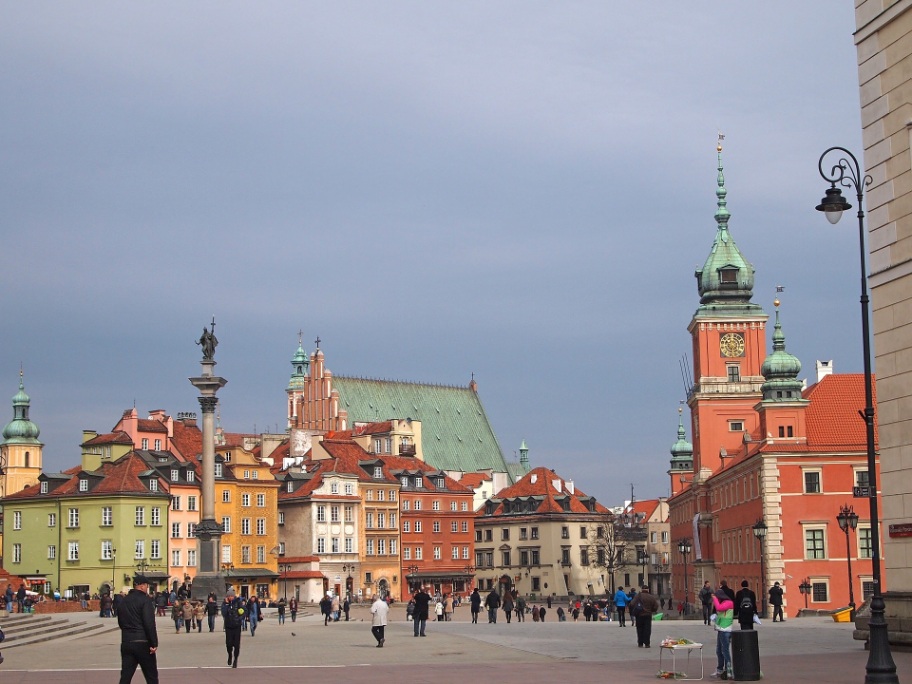
The capital and largest city of the country. You can wander around the alleys of the old town (Stare Miasto) with its colorful houses and take many photos. The old town is relatively “new” as it was almost completely leveled by the bombing during World War II. However, it was rebuilt from scratch based on its original appearance and condition.
You will find dozens of shops in the alleys, either for coffee and food or for shopping and souvenirs. Prices both in Warsaw and in Poland in general are quite low, which will allow you to enjoy your trip there a little more with the appropriate financial comfort! You can also visit the Royal Castle (Zamek Krolowski) in the old town. Behind the old town is the new town (Nowe Miasto), which gives a more modern tone to the town in general with tall buildings, modern architecture,and dozens of shops. Lazienki Park or the Royal Baths is the largest park in Warsaw. It is the must escape point from the urban landscape and there is also the monument dedicated to the great Polish composer Chopin. Depending on what season you visit it, squirrels can also be spotted everywhere!
Also, enjoy the nightlife, as Poland is one of the largest vodka producers in the world. You will find a great variety of drinks at quite affordable prices. We had found beer in a central store for about 1.5 € only, while a half liter bottle of locally produced vodka cost about 5.5 €. Obviously the prices change depending on the brand. Finally, the eyes of the visitors are obviously caught by the imposing center of culture and science of the city with the big clock at the top.
This building is the tallest in Poland with a height of 237 meters. Inside the building are various companies, libraries, cinemas and the Polish Academy of Sciences. You have the opportunity to enter and climb the elevator until the observation desk on the 30th. From there you can enjoy the panoramic view of Warsaw in front of you.
Read our ultimate travel guide for Warsaw
Zakopane
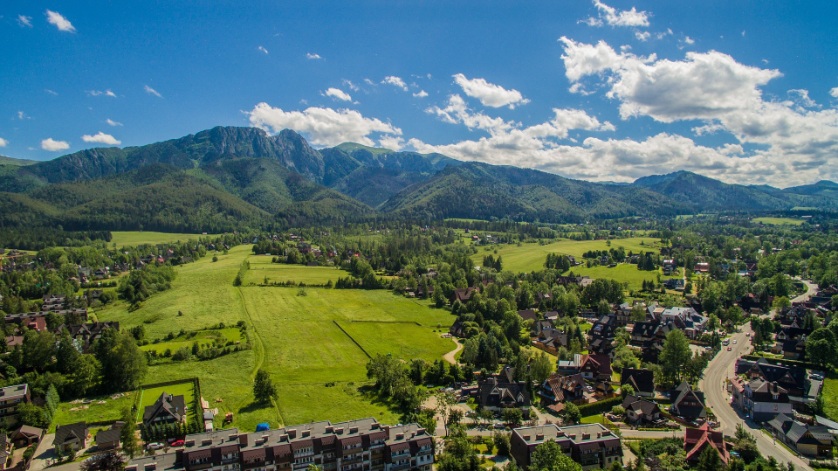
A popular mountain town resort, but many travelers are unaware of its existence. It is located in the Tatra Mountains on the southern border of Poland with Slovakia. Suitable mainly for those who love nature trips. One of the popular must-sees in this city is the cable car ride to the mountain Kasprowy, where there are also slopes for winter sports lovers. There is also a cable car for an alternative route to Gubalowka Hill. This route offers panoramic views of Zakopane Town and the mountains.
On the main pedestrian street of the town called Krupówki, you can buy souvenirs made of wood, leather or wool, as well as traditional delicious cheeses from local dairies in the area. As in all of Poland, here you will find recipes with lots of meat, several soups and seafood fried trout. Even from the mountain range national park and specifically in the Strazyska valley you can follow a route of about 40 minutes hiking that ends at the impressive Siklawa waterfalls. Relax, rest, become one with nature and immortalize the moments. More information about this picturesque city can be found on Zakopane.com.
Krakow
A medieval city with imposing architecture that has nothing to envy from the other cities of Poland. Apart from the fairytale buildings, this city is known for its connection with the legend of the dragon of Babel. The dragon is said to have lived on Babel Hill and terrorized the inhabitants in medieval times. Today, this legendary dragon from Krakow adorns the entrance of its “nest”, which can be visited from April to October.
On the hill of Babel is the homonymous Castle Babel. It is one of the most beautiful and imposing sights of Krakow. Above the castle, you can see the famous river Vistula. Inside the castle, a museum now operates with exhibits that will transport you to older times. Next door is the Krakow Cathedral, with a free entrance to its central part. Apart from myths and castles, what Krakow has to offer does not stop here. It is also famous for its fairytale old town. A walk you cannot miss. It stands well despite the blows it received during World War II.
You can enjoy your food or drink, browse the local market and shop for whatever you want at a reasonable price, or enjoy a city tour with a carriage. The spectacle of the city is really impressive and reminds one of another era. Also a must-see is the Schindler factory, which was made known in the eponymous film “Schindler’s List”. Finally, everywhere in the city there will be organized tours for the 2 of the top organized excursions in nearby areas: The Wieliczka Salt Mines and Concentration Camps. We will explain the two above in more detail in the following paragraphs.

Wieliczka Salt Mine
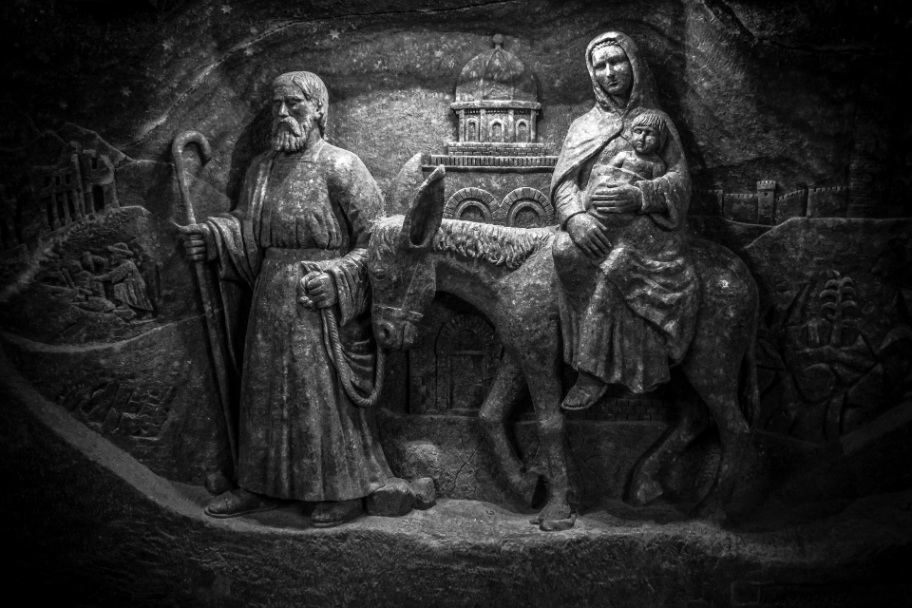
This monument has been included in the list of UNESCO World Heritage Sites. It is one of the most famous tourist attractions in Poland. Once you reach the outside space, nothing prepares you for what you are about to see inside! At a depth of 327 meters, you will find the existence of an underground city. In the bowels of the earth there is a route of 2km, to wander and see a space that looks like a museum, consisting of statues that are made of salt and represent life in the mine when it was in operation. An underground lake, banquets, a souvenir shop and a restaurant. Usually, this tour is closed by everyone during their stay in nearby Krakow. Just be very careful with private packages, because you will find large price variations from many “crooks”.
Concentration Camps
A black page in the history of Poland. Some do not forget, some pretend not to remember and many are those who do not even want to visit. It is one of the organized tours, which you do not go for relaxation and entertainment, but to see how far a sick mind can go. The most famous are the Auschwitz and Birkenau camps in the town of Oswiecim near Krakow. The scenes are unchanged despite the passage of time and the reason is to pass the macabre message of Nazism and extermination as realistically as possible.
During your visit there you will see personal items of the people who arrived there for a better future, personal experiences of individuals, reports and historical narratives from third parties. The spectacle is melancholy and sad. A visit to the camps is usually arranged during the travellers’ stay in Krakow. We had booked a private bus from Krakow with a guide. During our visit, they had shown a short film about the atrocities that took place in the concentration camps. More information about the concentration camps can be found on Auschwitz.org.

Mazury lake
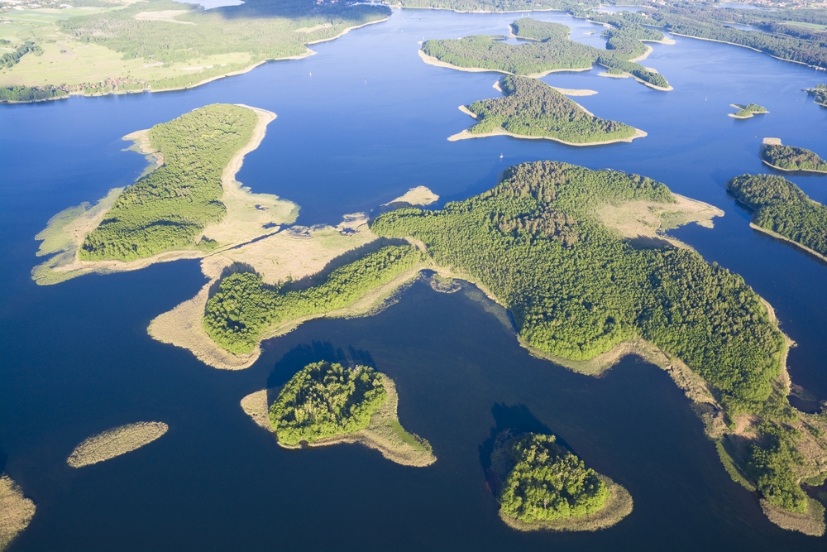
An area of stunning natural beauty with more than 2,000 lakes, dense forests, organic farms and charming holiday towns. There is no doubt that the best time to visit the area is the summer season. It is the busiest and most expensive time of the year. If you want to avoid the crowds, book your stay in early June or September, when the weather is still good, and there are fewer tourists.
It is located in northeastern Poland, about three hours by car from Warsaw. If you combine your trip to Mazury with a visit to Warsaw, the best way to get to Lakeland from and to Warsaw is by train. There are even flights to Olsztyn-Mazury Airport. It is one of the best places in Poland to go out and experience the countryside. You can go from kayaking along the picturesque Krutynia River and cycling in the dense forests of the region, to sailing and fishing in the country’s largest lakes.
Poznan
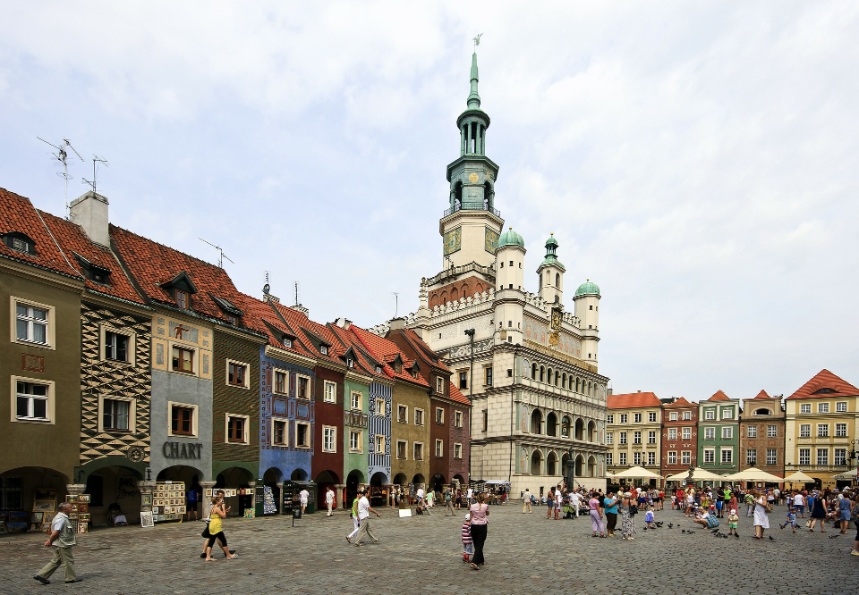
One of the oldest, most picturesque and cheapest countries in Poland. The city has a lively nightlife, as it has many students and many shops for entertainment and food. In the center of the square in the old market of the city you will see the impressive town hall. Every noon at 12, the town hall clock opens, and the famous Poznan goats appear, twisting their horns 12 times.
Its attractions include the croissant museum! Rogale ietwietomarcinskie, or St. Martin’s Croissant, a dessert that is not produced anywhere else in the world. It is filled with cream, poppy seeds, nuts, and fruits. You can also take a train ride around Lake Malta in a green and relaxing landscape at a cost of less than € 2 per person. Poznan still has a famous artist, Noriaki, who has filled graffiti in various parts of the city, and his fame has spread as far as London. More information about the city of Poznan can be found on poznan.travel.
Gdansk
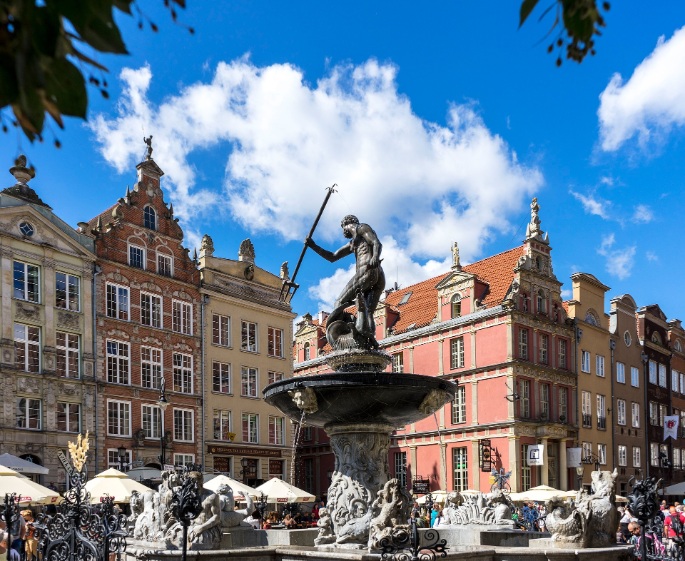
It is one of the most important tourist resorts in Poland and is the most important port in the country. The Royal Street (Trakt Królewski) is the main street of the Old Town, which connects it with the river Motlava. On this route, you can see the Golden Gate and the fountain of Poseidon in the big market. The docks in the big market used to have a bad reputation in the old days due to the criminals, however today it has become a popular tourist area with shops where you can enjoy your meal or your coffee by the water. The prison tower is especially eye-catching.
It was originally built as part of the city’s fortifications in the second half of the 14th century, but the complex was rebuilt between 1593 and 1604 with the smaller of the two buildings becoming a torture chamber and court respectively, while the largest tower became the prison.
Various executions took place there until the middle of the 19th century. It was destroyed during World War II and has now been extensively renovated and houses the Museum of Torture. Also, there you will find the church of Panagia, a large Gothic church.
The best time to go is mid-summer, due to the larger festival that is now an institution. The Saint Dominic Bazaar has over 7 centuries of history and is full of antiques, handicrafts, clothes, and much more. At the same time, there is a program of events with theatrical, concerts, and outdoor events that is a pole of attraction for both locals and travelers.
Packing Tips & When to go
Here are some basic things to keep in mind when traveling to Poland.
4 season clothing: It is the key to clothing during spring and autumn. Poland is a country that has four different seasons, so there is a chance that you will be both hot and cold during your visit there like the example we mention below with Krakow. So it is good to be prepared for both. In winter, of course, gloves, hats and boots are essential.
Shoes: Do not settle for just one pair. In winter, in particular, there is the possibility of either rain or snow. The possibility of your shoes getting wet is high, so it is good to have 2-3 alternative pairs with you. In general, prefer firm shoes such as boots in order to walk about comfortably without the danger of slipping.
Scarf: A versatile accessory that matches various types of clothing. But beyond that you can use it to cover your shoulders in the Catholic temples of the country that you visit as a sign of respect
Power bank: The essential gadget on every trip so that you do not run out of battery either on your mobile phone or on your camera.
The best time to visit Poland is in spring and summer in terms of favourable temperatures. Summer is relatively warm, and the weather will be your ally on your excursions in the country. The parks will be in bloom, and you will be able to organize your day undisturbed. The only disadvantage is the higher prices in hotels and tickets. Respectively, the weather in winter is quite cold, with rain and, in some cases even snowfall. Specifically during our stay in Krakow (winter season) we achieved in one day sun, rain, snow and sunshine again! The advantage of this period is that you will find better deals on travel packages.
Useful Words
As we mentioned at the beginning of the article, Polish is the official language of the country. This does not mean that you will encounter any communication problem in the tourist spots of the country. Even those who do not know English very well, will try in every way to help you or to communicate with you even with meanings! At least these experiences we experienced during our stay in Warsaw and Krakow. However, if you want to have a basic knowledge of their own words, here are some of them:
| Goodmorning | Dzien Dobry | Please | Nie ma za co |
| Goodnight | Dobranoc | Hi | Cześć |
| Yes | Tak | How are you? | Jak sie masz |
| No | Nie | My name is | Nazywam sie … |
| Thankyou | Dziekuje | Goodbye | Do widzenia |
Poland Travel Guide FAQ — Everything you need to know
No, Poland uses the Polish Złoty (PLN). Despite being an EU member since 2004, Poland has not adopted the euro. Always pay in Złoty; tourist shops that accept euros give terrible rates.
EU citizens: ID card sufficient, no visa needed. US, Canadian, Australian, and UK citizens: no visa required, 90-day Schengen rule applies.
Kraków Old Town (UNESCO), Auschwitz-Birkenau (book ahead), Wieliczka Salt Mine, Warsaw Old Town & Uprising Museum, Gdańsk waterfront, Tatra Mountains & Zakopane, Białowieża primeval forest, Wrocław. Browse more at GetYourGuide Poland.
May–June and September–October, ideal weather, fewer crowds, better prices. July–August is peak season, so you have to book everything well in advance, especially Auschwitz. December is magical for Christmas markets in Kraków, Warsaw, and Wrocław.
Bus from Kraków bus station ~1.5 hours. Or book an organized tour from Kraków, including transport and a guide, recommended for most visitors.