Thessaloniki in Greece is the country’s second-largest city and what many consider its most underrated destination. We’ve visited three times on various road trips and would happily go back again. This city offers an extraordinary combination: 15 UNESCO-listed early Christian and Byzantine monuments, one of the best food scenes in all of Greece, legendary nightlife, and a vibrant waterfront energy that Athens simply can’t match. Whether you’re wondering what to do in Thessaloniki for a weekend or planning a longer stay, this guide covers everything from the iconic White Tower to the hidden gems of Ano Poli.
Explore more of Greece with our complete Greece travel guide.
| Location | Northern Greece, Macedonia region |
| Founded | 315 BC by Cassander |
| UNESCO sites | 15 Early Christian & Byzantine monuments |
| Known for | Food, nightlife, Byzantine history, waterfront |
| Best time | April–June & September–October |
| Recommended stay | 2–3 days minimum |
| Airport | Macedonia International Airport (SKG) — 16km from center |
| From Athens | ~5.5 hours by car / ~6 hours by train |
| Tours & activities | 👉 GetYourGuide — Thessaloniki |
| Accommodation | 👉 Booking.com — Thessaloniki |
| Flights | Macedonia International Airport (SKG) — 16km from the center |
Where is Thessaloniki in Greece?
Thessaloniki is Greece’s second-largest city and the capital of the Macedonia region in northern Greece. It sits on the Gulf of Thermaikos at the northern tip of the Aegean Sea, approximately:
- 520km north of Athens — ~5.5 hours by car or 6 hours by train
- 90km east of Vergina (ancient royal tombs of Macedonia)
- 65km from Halkidiki peninsula (the best beaches near Thessaloniki)
Founded in 315 BC by King Cassander of Macedon (who named it after his wife, Alexander the Great’s half-sister Thessalonike), the city has been ruled by Romans, Byzantines, and Ottomans, and the layers of all these civilizations are visible on virtually every street corner.
Best things to do in Thessaloniki
White Tower and Statue of Alexander the Great
The White Tower is the most iconic landmark of Thessaloniki. Built in the 15th century, this cylindrical tower offers panoramic views of the city and the Thermaic Gulf. It also houses a museum that presents Thessaloniki’s history through various multimedia exhibits. Adjacent to the White Tower stands the impressive Statue of Alexander the Great, inaugurated in 1974. This statue symbolizes Thessaloniki’s deep connection to the legendary Greek general. Sculpted by Evangelos Moustakas, the statue portrays Alexander on his horse, Bucephalus, and stands 11 meters tall, including its pedestal.

Archaeological Museum of Thessaloniki
This museum is one of the most important in Greece, showcasing artifacts from the ancient Macedonian kingdom and other archaeological finds from the region. Highlights include the Derveni Crater and the golden larnax and diadem from the royal tombs of Vergina.
Rotunda of Galerius
Originally built as a mausoleum for Emperor Galerius, the Rotunda is one of the oldest monuments in Thessaloniki, dating back to the early 4th century. The construction of the Rotunda is unique in Greece due to its circular form, which closely follows the architectural style of the Pantheon in Rome.
It stands 29.80 meters tall to its dome, with an interior diameter of 24.50 meters and walls 6.30 meters thick. Constructed using stones, ceramic mortar, and broad bands of bricks, the Rotunda’s roof is tiered in three levels, culminating in a conical dome. Inside, there are eight arched windows and semicircular openings at the base of the dome, providing the primary light sources for the interior.

Ano Poli (Upper Town)
Ano Poli, or the Upper Town, stands as a testament to Thessaloniki’s rich history and resilience. Nestled atop a hill, this ancient quarter miraculously endured the ravages of the Great Fire of 1917, offering visitors a captivating glimpse into the city’s past.
Wandering through Ano Poli feels like stepping back in time. Its labyrinthine cobblestone streets wind their way past beautifully preserved Macedonian houses, adorned with colorful shutters and blooming bougainvillea. Each corner holds a story, inviting exploration and discovery.
For first-time travelers, a stroll through Ano Poli is a must-do experience. Lose yourself in its charming alleyways, where every turn reveals hidden gems waiting to be unearthed. As you meander, take in the panoramic views stretching across Thessaloniki, offering a breathtaking backdrop to your adventure.
The ambiance of Ano Poli is best savored slowly. Pause for a traditional Greek coffee at a quaint cafe, or indulge in mouthwatering meze dishes at a local taverna. Engage with the friendly locals, who are always eager to share their love for their neighborhood and city.
Beyond its architectural splendor, Ano Poli also boasts cultural treasures worth exploring. Visit the Eptapyrgio Fortress, a medieval stronghold that offers insight into Thessaloniki’s turbulent past. Or wander through the cobblestone streets to discover hidden churches and Byzantine monuments, each adding to the area’s allure.
Byzantine Walls
The Byzantine Walls of Thessaloniki stand as a formidable testament to the city’s fortification prowess and enduring legacy. Constructed in the late 4th century AD, these imposing ramparts once encircled Thessaloniki, serving as a crucial defense against invaders and marauders. Today, they offer a fascinating journey through time, with sections still intact that showcase intricate masonry and architectural ingenuity.
Walking these ancient fortifications is an immersive experience that brings the past to life. Imagine the countless soldiers who once patrolled these walls, standing watch against would-be invaders, or the bustling markets and bustling streets that thrived within the protective embrace of their stone walls. The Byzantine Walls of Thessaloniki are more than mere remnants of a bygone era; they’re living monuments to the city’s resilience, endurance, and unwavering spirit across the centuries.
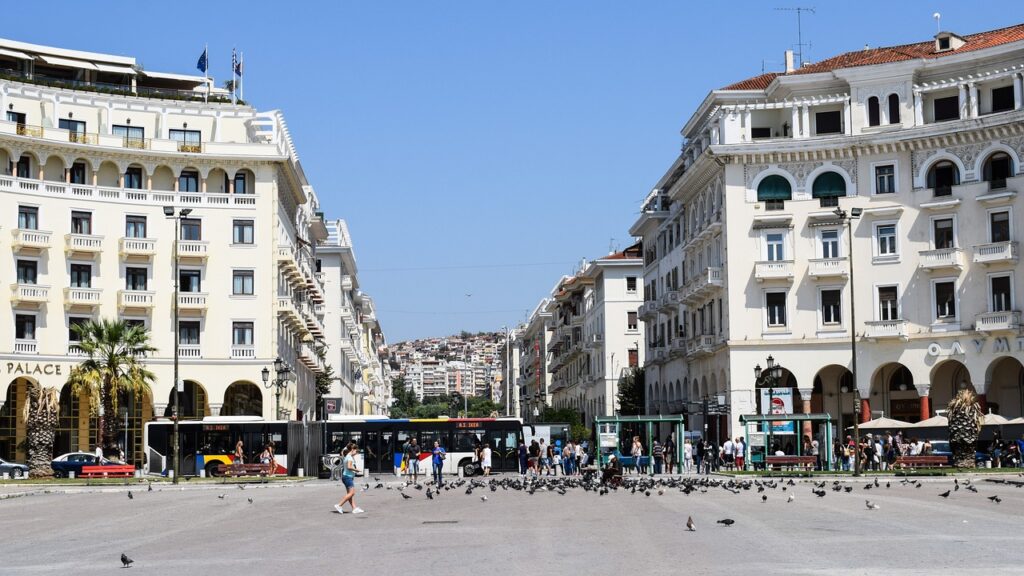
Aristotelous Square
Aristotelous Square is the central and most famous square in Thessaloniki. Designed by French architect Ernest Hébrard, the square is lined with impressive neoclassical buildings and is a hub of activity with numerous cafes, restaurants, and shops. It’s a great place to relax and people-watch.
Modiano and Kapani Markets
Located in the heart of Thessaloniki’s historic center, the Modiano and Kapani markets are vibrant hubs of activity, offering a sensory feast for visitors.
The Modiano Market, named after the Jewish benefactor who funded its construction in the early 20th century, is a bustling covered market filled with stalls selling an array of goods. Here, you’ll find fresh fruits and vegetables, aromatic spices, locally produced cheeses and olives, and an assortment of meats and seafood. The market is also known for its diverse selection of international foods, reflecting Thessaloniki’s multicultural heritage.
Just a stone’s throw away lies the Kapani Market, a lively open-air market that has been a fixture of the city for centuries. This bustling bazaar is a kaleidoscope of colors, scents, and sounds, as vendors peddle their wares amid the hustle and bustle of daily life. Wander through the maze of stalls to discover a treasure trove of goods, including traditional Greek pastries, dried fruits and nuts, handmade crafts, and household items.
Thessaloniki Waterfront (Nea Paralia)
The revamped waterfront area, known as Nea Paralia, is a beautiful place to take a stroll, enjoy a bike ride, or simply relax by the sea. The promenade stretches for several kilometers and features thematic gardens, sculptures, and plenty of spots to enjoy a coffee with a view.
Museum of Byzantine Culture
This museum is dedicated to Byzantine art and culture, featuring an extensive collection of artifacts, including mosaics, icons, frescoes, and jewelry. The museum’s exhibits provide an in-depth look at the Byzantine era and its impact on Thessaloniki.
Ladadika District
Ladadika is a historic district known for its vibrant nightlife and charming atmosphere. Once a bustling commercial area, it has been transformed into a lively neighborhood with a plethora of bars, restaurants, and tavernas. It’s the perfect place to experience Thessaloniki’s nightlife and enjoy some local music.
Our tip: Ladadika is best experienced from Thursday to Saturday evenings. Start at a traditional taverna for meze and grilled meats, then move to one of the bars for live Greek music. The atmosphere peaks around midnight.
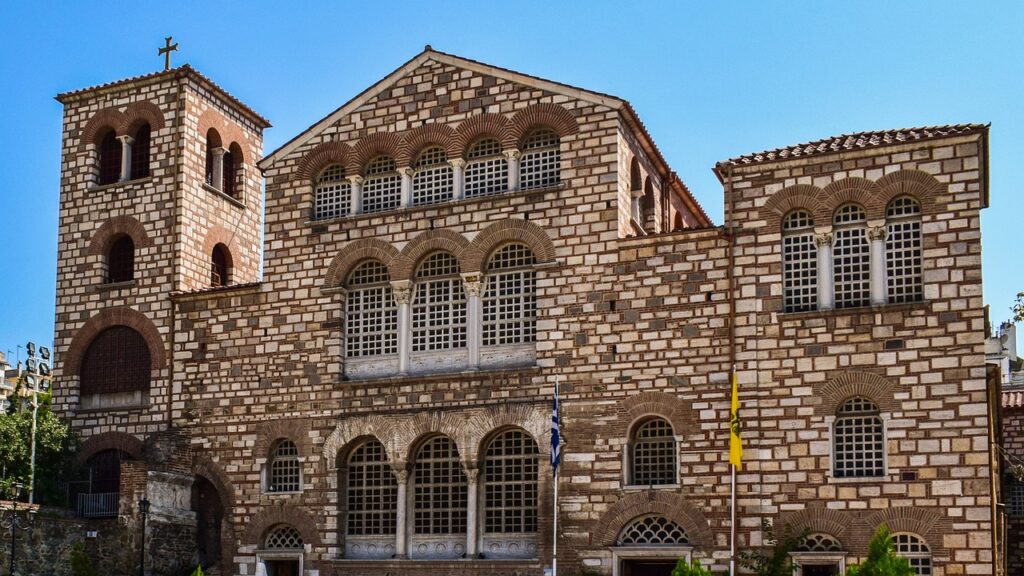
Church of Saint Demetrios
This 5th-century basilica is dedicated to Saint Demetrios, the patron saint of Thessaloniki. It is a UNESCO World Heritage site and one of the most significant religious sites in the city. The church is known for its beautiful mosaics and the crypt where Saint Demetrios was martyred.
OTE Tower
The OTE Tower is the only building in Greece that rotates! Located on the premises of the Thessaloniki International Fair (TIF), it was constructed in 1968 and completed in 1970. Designed by architect Alexandros Anastasiadis, this iconic tower features a revolving restaurant at the top, offering the best panoramic views of the city. Reservations are recommended to enjoy a meal while experiencing the stunning vistas.
The best food in Thessaloniki
Thessaloniki is widely considered the culinary capital of Greece. The city’s food culture is shaped by its multicultural heritage, Greek, Ottoman, Jewish, and Anatolian influences all converge here.
Must-try dishes and where to find them:
- Bougatsa — flaky pastry filled with cream or cheese, best at Bantis or Terkenlis near Aristotelous Square (€2–3)
- Gyros Thessaloniki-style — different from Athens, served with chips inside the pita
- Koulouri — sesame bread rings sold by street vendors throughout the city
- Trigona Panoramatos — honey-soaked triangular pastries unique to Thessaloniki
- Fresh seafood — head to Modiano Market or the Kalamaria waterfront for the freshest catch
For a guided food tour of Thessaloniki’s markets and hidden gems, browse food tours on GetYourGuide.
Travel Tips
Best Time to Visit: The best time to visit Thessaloniki is during spring (April to June) and autumn (September to November), when the weather is pleasant, and the city is not too crowded.
Transportation: Thessaloniki is well-connected by public transport, including buses and taxis. The city center is compact and walkable, making it easy to explore on foot. For those looking to venture beyond the city limits and explore nearby destinations such as picturesque beaches, charming villages, or ancient ruins, renting a car can be a practical and convenient option. However, if your itinerary primarily focuses on experiencing Thessaloniki’s rich tapestry, relying on public transport or walking is highly recommended.
Accommodation: For the best areas to stay in Thessaloniki: the City Center (Aristotelous area) for walkability to all sights; Ladadika for nightlife and restaurants; the Waterfront for sea views and the Nea Paralia promenade. For the best views and most authentic experience, Ano Poli is magical, but note it’s steep and you’ll need taxis.
Browse all available hotels in Thessaloniki on Booking.com, from luxury 5-star seafront hotels to budget hostels near Aristotelous Square.
How to get to Thessaloniki
By plane: Macedonia International Airport (SKG) is 16km from the city center. Direct flights from major European cities year-round, with more routes in summer. Compare flights on Skyscanner.
By car from Athens: ~520km via E75 is approximately 5.5 hours. Compare car rentals on Discovercars.com.
By train from Athens: ~6 hours from Larissa Station. Scenic but slower. Comfortable for overnight travel.
By bus from Athens: KTEL buses from the Kifissos terminal. Approximately 6–7 hours.
Day trips from Thessaloniki
Thessaloniki is an ideal base for some of Greece’s most important day trips:
Vergina Royal Tombs: (~90km, 1.5 hours) The UNESCO-listed ancient Macedonian tombs of King Philip II, father of Alexander the Great. One of the most extraordinary archaeological sites in Greece. Not to be missed.
Halkidiki beaches: (~65km, 1 hour) Three peninsulas with some of the most beautiful beaches in northern Greece. Kassandra is the most developed; Sithonia is the most beautiful; Athos is the most spiritual.
Meteora: (~230km, 2.5–3 hours) The monasteries on rock pillars are a natural next stop after Thessaloniki for anyone heading south towards Athens. Read our complete Meteora guide.
Mount Olympus: (~90km, 1.5 hours) The mythical home of the Greek gods. Excellent hiking trails from the village of Litochoro for all fitness levels. Read about our climb to Olympus.
Thessaloniki FAQ — Everything you need to know
The top things to do in Thessaloniki are: visiting the White Tower and its museum, walking the Nea Paralia waterfront promenade, exploring the Byzantine churches (especially Agios Dimitrios, which is UNESCO-listed), wandering Ano Poli for sunset views, browsing Modiano and Kapani markets, and spending an evening in Ladadika for the city’s legendary food and nightlife.
At least 2–3 days to cover the main sights comfortably. In 2 days, you can see the White Tower, the main Byzantine monuments, Ano Poli, the markets, and Ladadika. A third day allows for a day trip to Vergina or Halkidiki beaches.
Thessaloniki is known for its food (bougatsa, gyros, Modiano Market), its 15 UNESCO-listed Byzantine monuments, including the White Tower and Agios Dimitrios, its lively nightlife in Ladadika, the Nea Paralia waterfront promenade, and its unique multicultural heritage shaped by Greek, Roman, Byzantine, Ottoman, and Jewish history.
By car: ~520km via E75, approximately 5.5 hours. By train: ~6 hours from Larissa Station. By plane: 55 minutes, multiple flights daily. Compare prices on Skyscanner. Flying is often the fastest and most cost-effective option.