Embarking on a journey to Budapest is akin to stepping into a time capsule of rich history, vibrant culture, and spellbinding charm. Picture this: it’s a few days before Christmas, and the city is bathed in the warm glow of festive lights, exuding an aura of enchantment that lingers in the crisp winter air. That was our first encounter with this captivating city, a tale that begins with the magic of the holiday season.
As we strolled along the cobbled streets, the aroma of mulled wine and cinnamon-dusted pastries wafted through the air, drawing us toward the bustling Christmas markets that adorned the squares. Vendors, wrapped in scarves and smiles, shared tales of tradition as they offered intricate handcrafted treasures and local delicacies, inviting us to indulge in the city’s holiday spirit.
Beyond the festive revelry, Budapest’s allure lies in its duality, a harmonious blend of Buda’s historic grandeur and Pest’s vibrant pulse. The majestic Danube River weaves through the heart of the city, reflecting the iconic Chain Bridge and the illuminated Parliament building in its gentle ripples. It’s a city where centuries-old architecture meets trendy ruin bars, where thermal baths echo tales of healing and relaxation, and where every street corner whispers of a storied past waiting to be explored.
Join us as we unravel the mysteries and treasures of Budapest, weaving personal experiences with invaluable insights to guide you through this city of endless wonders. Let the charm of Budapest, both timeless and ever-evolving, captivate your senses and ignite a passion for exploration that knows no bounds.
| Country | Hungary |
| Population | ~1.8 million (city) |
| Language | Hungarian, but English is widely spoken in tourist areas |
| Currency | Hungarian Forint (HUF) |
| Entry (EU/Greeks) | ✅ ID card sufficient |
| Entry (US/Canada/Australia) | ✅ No visa — 90 days Schengen |
| Hungarian Parliament | ~€13–14 EU/Greeks (with ID) / ~€26–28 non-EU |
| Széchenyi Baths | ~€25–35 (weekday/weekend) |
| Fisherman’s Bastion towers | ~€4 / FREE after 9 pm (Jun–Sep) / FREE after 7 pm (Oct–May) |
| Matthias Church | ~€12 |
| Danube cruise | ~€18–25 daytime / €30–50 evening |
| 24-hour pass | ~€6–8 |
| Hostel dorm | ~€20–35/night |
| Mid-range hotel | ~€80–140/night |
| Best time | Apr–Jun & Sep–Oct (avoid F1 & Sziget in Jul–Aug) |
| Flights | 👉 Skyscanner |
| Accommodation | 👉 Booking.com — Budapest |
| Tours & activities | 👉 GetYourGuide — Budapest |
| eSIM Hungary | 👉 Airalo |
Transportation
Transfer from the airport
Transportation options from Budapest Ferenc Liszt International Airport (BUD) to the city center cater to diverse preferences, ensuring a smooth transition for travelers arriving in Hungary’s capital.
Bus: The airport hosts a well-organized bus service facilitating swift connections to various parts of Budapest. Multiple routes operate, including the 100E express bus, directly linking the airport to the city center. Passengers can conveniently access key locations, such as Deák Ferenc Square, with a travel duration of approximately 30-40 minutes.
Airport Shuttle: Several shuttle services offer shared rides to major hotels and key destinations within Budapest. These shuttles provide a cost-effective option, albeit with slightly varied journey times depending on drop-off locations and traffic conditions.
Taxi: Taxis are readily available outside the airport terminals, offering personalized door-to-door transfers to your chosen address in Budapest. The journey typically takes around 30-40 minutes, depending on traffic, providing a convenient albeit pricier transportation choice.
Private Transfers: Pre-arranged private transfer services offer tailored travel experiences, accommodating various group sizes and preferences. These services ensure personalized and efficient transportation from the airport to your desired location in Budapest.
Transportation within Budapest
Budapest prides itself on an extensive and user-friendly transportation network, offering various modes of travel for visitors to explore the city’s vibrant streets and attractions:
Tram: Budapest’s tram system is a convenient way to navigate the city, with multiple routes spanning key areas. Trams operate frequently, connecting central districts and providing a scenic view of the city. Tickets are available for purchase onboard or at designated ticket machines.
Bus: Complementing the tram system, buses traverse Budapest, covering extensive routes that include both central locations and suburban areas. Travelers can buy tickets directly from the driver or use alternative options like mobile ticketing apps.
Metro: Budapest boasts a well-established metro network, comprising four lines (M1, M2, M3, and M4) that efficiently link different parts of the city. Operating from early morning until late at night, the metro is a swift mode of transportation for reaching various destinations. Tickets are available at stations or through mobile apps.
Walking: Exploring Budapest on foot is a rewarding experience, especially in the city center, where numerous landmarks, shops, and restaurants are within easy walking distance. The historic streets and architectural marvels reveal the city’s rich cultural heritage.
Bicycle: Embracing a culture of cycling, Budapest offers rental options and bike-sharing services for visitors keen on pedaling through the city. Exploring Budapest on a bike allows travelers to discover hidden gems and traverse the charming streets at a relaxed pace.
Car: While driving is feasible in Budapest, especially for venturing outside the city, navigating the bustling city center may pose challenges due to traffic and limited parking. Public transportation or cycling often proves more convenient for exploring within Budapest itself. However, renting a car can be advantageous for those planning day trips or excursions to the surrounding countryside and neighboring towns. For car rental options, you can check on Discovercars.com.
What to do in Budapest
Buda Castle
Buda Castle stands as a testament to Budapest’s rich history and architectural grandeur. Perched atop Castle Hill, this iconic fortress offers a mesmerizing glimpse into the city’s past and presents a breathtaking panorama of the Danube River.
Constructed in the 13th century and subsequently expanded and renovated through the ages, Buda Castle encapsulates the essence of Hungary’s regal heritage. Imposing stone walls, Gothic arches, and Baroque elements adorn this majestic edifice, serving as a visual narrative of the city’s evolution.
Within its walls lie an array of cultural treasures, including the Hungarian National Gallery and the Budapest History Museum, housing priceless artifacts and artworks that chronicle the nation’s history.
Visitors can revel in the castle’s picturesque courtyards, stroll through lush gardens, and witness the Changing of the Guards, a ceremonial spectacle that adds a touch of regal splendor to the experience.
Buda Castle, with its architectural splendor and historical significance, remains an essential landmark, inviting travelers to immerse themselves in the rich tapestry of Budapest’s past.

Fisherman’s Bastion
Perched majestically on the Buda side of the Danube, Fisherman’s Bastion stands as an architectural gem overlooking the city of Budapest. This stunning structure, with its fairytale-like towers and intricate stone carvings, offers panoramic vistas of the Hungarian capital that are simply breathtaking.
Constructed in the late 19th century, Fisherman’s Bastion was designed to celebrate the country’s heritage while paying homage to the guild of fishermen who once protected this part of the city. Its neo-Gothic and neo-Romanesque architecture, adorned with turrets and archways, provides a mesmerizing backdrop against the skyline.
The Bastion’s terrace, with its seven ornate towers symbolizing the seven Magyar tribes that founded Hungary, offers visitors a sweeping view of Budapest’s iconic landmarks, including the Parliament building and the Chain Bridge. The vantage points allow for stunning photo opportunities, making it a favorite spot for locals and tourists alike.
As we stood atop the Bastion, the gentle breeze carried the city’s whispers, while the sight of the Danube flowing below left an indelible mark. The place seemed to capture Budapest’s essence, a harmonious blend of history, architecture, and breathtaking views.
Fisherman’s Bastion, with its captivating architecture and panoramic views, stands as a must-visit destination, inviting travelers to revel in the beauty and history of Budapest.

Chain Bridge
The Chain Bridge, an emblem of Budapest’s connectivity and architectural splendor, gracefully spans the Danube River, linking the Buda and Pest sides of the city. Constructed in the mid-19th century, this iconic suspension bridge stands as a testament to engineering brilliance and aesthetic elegance.
With its stone lions guarding each end and a symmetrical design characterized by ornate iron chains, the Chain Bridge exudes an understated yet commanding presence. Its historical significance lies not just in physically connecting the two halves of the city but in symbolizing the unification of Buda and Pest into one metropolis.
Upon the bridge’s completion, it ushered in an era of growth and prosperity for Budapest, facilitating trade and fostering closer ties between communities on both sides of the river.
The Chain Bridge serves as a lifeline for locals and a point of fascination for visitors, offering a picturesque view of Budapest’s skyline. Illuminated against the night sky, it adds a touch of enchantment to the cityscape, captivating all who gaze upon it.

Parliament Building
The Parliament Building in Budapest stands as an architectural masterpiece along the banks of the Danube River, captivating all who behold its grandeur. This iconic structure, an exemplary display of neo-Gothic design, serves as a symbol of Hungary’s rich history and unwavering democracy.
Constructed in the late 19th century, the Parliament Building’s imposing facade, adorned with intricate spires, arches, and ornate details, commands attention. The symmetrical layout and symphony of towers and domes create a captivating silhouette against the Budapest skyline.
With its symmetrical wings, housing chambers, and an impressive central dome rising above, the Parliament Building exudes an air of grandiosity and architectural finesse. The intricate detailing on its exterior, featuring sculptures, reliefs, and statues of historical figures, narrates Hungary’s storied past and cultural heritage.
As one gazes upon this architectural marvel, it’s impossible not to be moved by its sheer magnificence. The building’s location on the riverbank adds to its allure, offering splendid views from various vantage points along the Danube.

Heroes’ Square
Heroes’ Square stands proudly at the end of Andrássy Avenue in Budapest. This expansive square, framed by neoclassical structures and monumental statues, pays homage to the country’s leaders and historical figures.
At its center stands the Millennium Memorial, a towering column topped by the Archangel Gabriel, a symbol of Hungary’s Christian heritage. Flanked by colonnades housing statues of renowned leaders and personalities pivotal to Hungary’s history, the square exudes a sense of national pride and honor.
The symmetrical layout and majestic scale of Heroes’ Square mirror the nation’s aspirations and commemorate the thousand-year history of the Magyar people. Its design and symbolic elements aim to capture the essence of Hungary’s cultural and historical narrative.

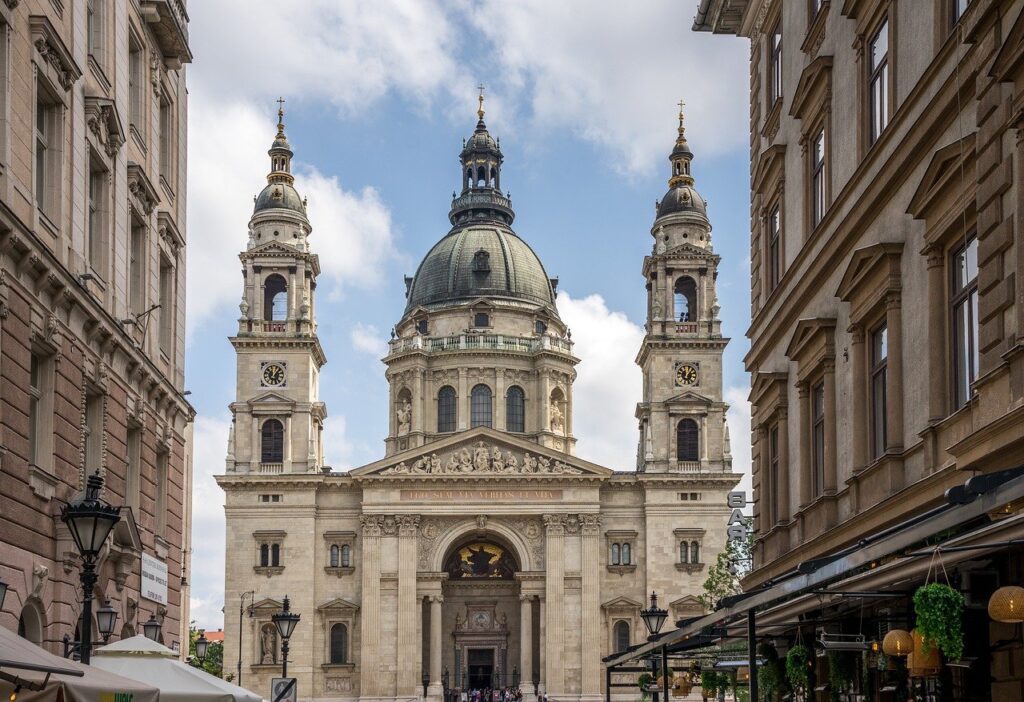
St. Stephen’s Basilica
This architectural gem, dedicated to Hungary’s first king, St. Stephen, showcases a harmonious blend of neoclassical and neo-Renaissance styles. Ascending towards the heavens, the basilica’s dome dominates the city skyline, offering a mesmerizing sight for visitors and locals alike. Its ornate facade, adorned with intricate sculptures and detailed embellishments, reflects the dedication and craftsmanship of its creators.
Upon entering, one is greeted by a sense of tranquility and reverence, amplified by the basilica’s breathtaking interior. The high ceilings, adorned with mesmerizing frescoes, and the play of light filtering through stained glass windows create an ambiance of solemnity and spiritual grace. The basilica houses notable relics, including the mummified right hand of St. Stephen, displayed in a reverent manner, inviting contemplation and reflection among visitors.
The basilica houses notable relics, including the mummified right hand of St. Stephen, displayed in a reverent manner, inviting contemplation and reflection among visitors.
Shoes on the Danube Bank
The Shoes on the Danube Bank memorial stands as a poignant testament to Budapest’s tragic past, silently narrating a somber chapter of history. Set along the banks of the Danube, this memorial commemorates the lives lost during the harrowing days of World War II.
Rows of iron shoes, in various sizes and styles, symbolize the shoes left behind by Jewish victims who were senselessly shot and fell into the Danube during the war. Each pair of shoes represents a life, a life abruptly ended, leaving an indelible mark on the fabric of Budapest’s history.
Visitors approaching the memorial often pause in reflection, contemplating the stark reality and the human toll of wartime atrocities. The solemnity of the memorial is palpable, evoking a sense of sorrow and reverence for those who perished.
Gellért Hill and Citadella
Gellért Hill, crowned by the imposing Citadella, stands as a prominent landmark overlooking the city of Budapest. This iconic hill, named after Saint Gellért, offers visitors not only panoramic views but also a glimpse into Budapest’s history and natural beauty.
Ascending the winding paths to the Citadella, one encounters remnants of the past, including the Liberation Monument, a tribute to Hungary’s liberation from Nazi occupation. The statue’s striking presence atop the hill serves as a reminder of the country’s resilience and struggles through tumultuous times.
The vantage points from Gellért Hill afford breathtaking vistas of Budapest, showcasing the Danube River dividing the city into its Buda and Pest sides. The Chain Bridge, Parliament Building, and the vast expanse of architectural marvels unfold like a picturesque canvas from this elevated vantage point.
Apart from its historical significance, Gellért Hill boasts lush greenery and tranquil spots ideal for relaxation or quiet contemplation. The hill’s ambiance invites both locals and tourists to bask in the serenity of its parks and gardens.
Hidden Gems & Local Favorites
Ruin Bars
Ruin Bars, a unique facet of Budapest’s nightlife, breathe life into abandoned buildings, infusing them with an eclectic mix of art, culture, and vibrant energy. These establishments, born from creativity and repurposing, have become emblematic of Budapest’s bohemian spirit.
Nestled within the remnants of derelict buildings and courtyards, Ruin Bars enchant visitors with their unconventional charm and raw, unpolished aesthetics. Each bar possesses its own distinct character, adorned with quirky decor, mismatched furniture, and an ambiance that seamlessly blends vintage with contemporary.
The juxtaposition of graffiti-clad walls, fairy lights, retro furnishings, and avant-garde art installations creates an atmosphere that is both nostalgic and avant-garde. As night falls, these spaces transform into lively hubs, bustling with locals and tourists alike, seeking an authentic and offbeat experience.
Ruin Bars are not just places to savor cocktails or local brews; they are cultural hubs that encapsulate Budapest’s artistic soul. These venues often host live music performances, art exhibitions, and cultural events, fostering a sense of community and celebration of creativity.
Thermal Baths
Thermal Baths in Budapest stand as timeless sanctuaries, offering respite and rejuvenation amidst the city’s hustle and bustle. These age-old thermal baths, renowned for their healing properties, serve as cultural treasures deeply rooted in Budapest’s history.
Visitors stepping into these thermal retreats are transported into a realm of tranquility and relaxation. The intricate architecture, adorned with ornate details, reflects a blend of historic charm and opulence.
The mineral-rich thermal waters, sourced from natural springs, are revered for their therapeutic benefits. Bath-goers immerse themselves in pools of varying temperatures, indulging in the soothing embrace of the mineral-infused waters.
Apart from their therapeutic qualities, the thermal baths are social hubs, where locals and tourists converge, fostering a sense of camaraderie and well-being. Conversations flow freely as individuals from all walks of life come together to unwind and revel in the healing waters. Beyond the indulgence in therapeutic waters, these baths offer a holistic experience, often featuring spa treatments, saunas, and wellness therapies.
Margaret Island
Margaret Island, nestled within the Danube River, offers a serene escape from the urban rhythm of Budapest. This verdant oasis, spanning approximately 2.5 kilometers, serves as a recreational haven and a cherished natural retreat within the bustling city.
The island’s lush greenery, landscaped gardens, and tranquil pathways invite visitors to explore its serene landscape. From strolls to cycling routes, the island caters to both relaxation seekers and active enthusiasts alike.
The musical fountain, a centerpiece of the island, dazzles spectators with its synchronized water displays, creating a whimsical atmosphere during its performances. The fountain’s vibrant dances of water and light, set to music, draw crowds of admirers who gather to witness its enchanting shows.
Margaret Island is also home to historic landmarks and cultural attractions, including the ruins of a Dominican convent, the charming Water Tower, and the iconic Japanese Garden. These remnants of the island’s past add a touch of history and intrigue to its natural beauty.
For fitness enthusiasts, the island offers numerous sports facilities, jogging tracks, and open spaces ideal for yoga or picnics. Meanwhile, recreational options such as pedal boats and rowing facilities on the island’s lakes cater to those seeking a bit of adventure.
Great Market Hall (Nagyvásárcsarnok)
The Great Market Hall, known locally as Nagyvásárcsarnok, stands as a vibrant emblem of Budapest’s culinary heritage and cultural vibrancy. This bustling market, situated at the heart of the city, beckons visitors with its lively atmosphere and an array of sights, sounds, and aromas.
Entering the Great Market Hall, one is immediately immersed in a sensory extravaganza. The bustling stalls, adorned with vibrant displays of fresh produce, local delicacies, and traditional crafts, create a kaleidoscope of colors and scents that captivate the senses.
The ground floor, a treasure trove of culinary delights, offers an extensive selection of fruits, vegetables, meats, cheeses, and spices. The air is alive with the chatter of vendors and the inviting aromas of freshly baked bread and simmering paprika-laden stews.
Ascending to the upper level, visitors discover a haven for authentic Hungarian handicrafts, souvenirs, and artisanal goods. Intricately woven textiles, hand-painted ceramics, and locally sourced honey and paprika products line the stalls, offering a glimpse into Hungary’s rich artistic heritage.
Beyond its offerings, the Great Market Hall is a melting pot of culture and community. Locals and tourists converge here, exchanging stories and culinary traditions, fostering a vibrant and welcoming atmosphere that encapsulates Budapest’s spirit.
Day Trips from Budapest
Vienna
Vienna, the imperial capital of Austria, boasts a rich tapestry of history and culture. Delve into its grand past at iconic sites like Schönbrunn Palace and St. Stephen’s Cathedral. Read our travel guide for Vienna for a more comprehensive exploration.
Bratislava
Nestled along the Danube River, Bratislava, Slovakia’s capital, captivates visitors with its blend of historic allure and contemporary vibrancy. The city’s Old Town, adorned with medieval architecture, welcomes wandering souls to explore its charming cobblestone streets, lively squares, and inviting cafés. From the iconic Michael’s Gate to the intriguing sculptures like Cumil the Peeper, Bratislava’s historical landmarks offer a glimpse into its rich past. The Bratislava Castle stands proudly atop a hill, offering panoramic views of the city and the majestic Danube River.
Esztergom and Visegrád
Esztergom, nestled on the banks of the Danube River, stands as a cradle of Hungarian Christianity and historical significance. The city’s crown jewel is the Esztergom Basilica, a towering edifice overlooking the river, renowned as Hungary’s largest church and a testament to its religious heritage. Visitors can delve into history at the Hungarian National Museum of Christian Art or revel in the breathtaking vistas from the Esztergom Castle Hill, offering panoramic views of the Danube Bend.
A short journey from Esztergom lies Visegrád, a medieval town boasting ancient ruins and scenic landscapes. The Visegrád Castle, perched atop a hill, provides not only a glimpse into Hungary’s royal past but also stunning vistas of the Danube’s meandering path. Adventure seekers can indulge in outdoor activities at the Visegrád Citadel or explore the historic ambiance of the Royal Palace ruins.
Eger
Eger, a captivating city nestled in the northern part of Hungary, is renowned for its historical heritage, architectural beauty, and wine culture. The city’s iconic Eger Castle, a symbol of resilience, offers panoramic views and recounts tales of its past, including the famous Siege of Eger.
The city’s Baroque-inspired architecture graces the streets, notably showcased in landmarks like the Eger Basilica and the charming Dobó Square. The renowned Thermal Baths of Eger invite relaxation and rejuvenation, boasting therapeutic waters believed to have healing properties.
Eger’s vineyards produce esteemed wines, notably the bold red Bull’s Blood (Egri Bikavér), inviting wine enthusiasts to explore cellars and indulge in tastings. The city’s vibrant culinary scene complements its wines, offering delectable local dishes like hearty stews and savory pastries.
Best Places to Eat & Drink in Budapest
New York Café: Step into the opulent world of Budapest’s New York Café, a historic gem hailed as one of the most beautiful cafés in the world. Its palatial interiors adorned with frescoes, gilded ornaments, and grand chandeliers create a stunning backdrop for indulging in exquisite pastries, coffee, and sumptuous meals. Experience the elegance of a bygone era in this architectural marvel that has hosted literary figures and artists throughout history.
Mazel Tov: Embrace the vibrant energy of the Jewish Quarter at Mazel Tov, an enchanting ruin bar offering a fusion of Middle Eastern and Mediterranean cuisine. Nestled in a beautifully restored space adorned with fairy lights and greenery, this lively spot serves delectable dishes like falafel, shawarma, and mezze platters. The lively atmosphere and open-air setting make it a favored destination for delightful dining and evening gatherings.
Budapest Barbecue Company: Dive into a carnivorous delight at Budapest Barbecue Company, a haven for meat lovers seeking exceptional flavors and smoked specialties. From succulent ribs and juicy briskets to tantalizing pulled pork, this barbecue joint delivers an authentic American-style dining experience, complemented by a laid-back ambiance and an impressive selection of craft beers.
Dobrumba: Savor the eclectic tastes of the Mediterranean at Dobrumba, an inviting restaurant where flavors from the Middle East and North Africa meet. Feast on delectable dishes like hummus, falafel, and lamb tagine, prepared with fresh ingredients and bursting with aromatic spices. The welcoming atmosphere and cozy interiors create a perfect setting for an unforgettable dining experience.
High Note SkyBar: Elevate your dining experience at High Note SkyBar, an upscale rooftop venue offering panoramic views of Budapest’s skyline. Sip on innovative cocktails and relish an array of gourmet dishes while soaking in the breathtaking vistas of the Danube River and the city’s iconic landmarks. The chic ambiance and sophisticated setting make it an ideal spot for a memorable evening.
Szimpla Kert: Delve into Budapest’s unique nightlife at Szimpla Kert, the quintessential ruin bar that embodies the city’s alternative culture. Set within a captivatingly eclectic space adorned with quirky decor and vibrant murals, this iconic venue hosts a maze of rooms, each with its own distinct charm. Enjoy live music, cultural events, and a wide selection of drinks in this bohemian paradise, where creativity knows no bounds.
When to go
Late Spring and Early Autumn: These seasons are lovely in Budapest. Temperatures hover around 15-25°C (59-77°F), offering pleasant weather for exploration. Springtime showcases the blooming of gardens and parks, while autumn paints the city with golden hues. Crowds are thinner, making it an ideal time for sightseeing without the summer rush.
Summer: Budapest shines in summer with temperatures soaring beyond 25-30°C (77-86°F). It’s bustling with events, from music festivals to outdoor parties. The city’s parks, like Margaret Island and City Park, become vibrant hubs for picnics and outdoor activities. However, expect larger crowds and higher accommodation prices.
Winter: Embrace the enchanting winter charm of Budapest. The city transforms into a winter wonderland, especially around Christmas. The streets dazzle with festive lights, and Christmas markets adorn the city squares. Despite cooler temperatures ranging from 0-5°C (32-41°F), the cozy atmosphere and the aroma of traditional Hungarian treats like kürtőskalács (chimney cake) and mulled wine create a magical ambiance.
Whether it’s exploring the city’s rich history, reveling in its lively summer festivals, or experiencing the festive spirit during the winter months, Budapest offers something unique in every season, promising an unforgettable visit no matter when you choose to go.
Budapest Travel Guide FAQ — Everything you need to know
No, Hungary uses the Hungarian Forint (HUF).
Weekday cabin: ~€25–30. Weekend: ~€30–35. Early bird entry (before 9 am): ~€20–25. Book online to skip queues. Children under 14 are not permitted.
Free entry in the evenings after 9 pm (between June 1 and September 30) and in the evenings after 7 pm (between October 1 and May 31). Upper towers during the day: ~€4. The lower terrace is always free. Evening visits are actually more spectacular, because the illuminated Parliament below is extraordinary.
Born in the early 2000s when artists and entrepreneurs repurposed abandoned buildings in the Jewish Quarter, they’ve become the beating heart of Budapest nightlife. Szimpla Kert (Kazinczy u. 14) is the original, free entry, beers from ~€3. On Sunday mornings, it hosts a farmers’ market (9 am–2 pm).
April–June (ideal: warm weather, reasonable prices, full cultural program) and September–October (wine festival, beautiful autumn light, fewer crowds). Avoid late July (F1 Grand Prix and hotel prices are double) and early August (Sziget Festival). Winter is excellent for thermal baths and the Christmas market.