Romania! It is not the most popular tourist destination, but it has a lot to offer its visitors. It is a country full of legends and traditions. The land of mystery and Count Dracula! It is worth visiting its medieval towns, picturesque villages, and admiring its well-preserved castles. Another element that attracts a lot of people is also the pretty low prices! Below you will find all the necessary information before your first trip to the country.
| Capital | Bucharest |
| Population | ~19 million |
| Language | Romanian |
| Currency | Romanian Leu (RON) |
| Exchange rate | €1 ≈ 5 RON, check XE Currency Converter |
| Plug type | C / F — same as most of Europe |
| Voltage | 230V / 50Hz |
| Schengen | ✅ Full member since January 1, 2025 |
| Entry (EU/Greeks) | ✅ ID card sufficient |
| Entry (US/Canada/Australia) | ✅ No visa — 90 days Schengen |
| Bran Castle | ~40–90 RON (~€8–18) |
| Pelș Castle | ~50–100 RON (~€10–20) — closed Mon & Tue |
| Bucharest metro | ~3 RON (~€0.60) — cheapest in Europe |
| Best time | May–Jun & Sep–Oct |
| Flights | 👉 Skyscanner |
| Accommodation | 👉 Booking.com — Romania |
| Tours & activities | 👉 GetYourGuide — Romania |
| Car rental | 👉 Discovercars.com |
| eSIM Romania | 👉 Airalo |
Where to Stay in Romania — Accommodation Costs
Romania remains one of Europe’s most affordable destinations. Prices have risen since the pandemic, but still offer excellent value:
Bucharest:
- Hostel dorm: €20–35/night
- Budget hotel/guesthouse: €40–70/night
- Mid-range hotel (couple): €50–100/night
- Luxury: €100–250+/night
Brașov:
- Hostel dorm: ~€20–30/night
- Mid-range hotel: ~€80–100/night
- Luxury (e.g. Radisson Blu Aurum): ~€150+/night
Rural guesthouses (pensiuni): Double room with breakfast: €25–50/night, often the best-value option in the country. Warm hospitality, home-cooked food, and direct access to nature.
Budget daily: ~€50/day (hostel + local food + transport) Mid-range daily: ~€80–120/day
Find available rooms on Booking.com
Traditional Food in Romania
Romanian cuisine is quite tasty, with rich flavours quite economical for tourists, but a bit heavy for our standards. It is a mixture of different cuisines, mainly from the Balkans, but adapted to their own style. Some typical traditional dishes are listed below:
Sarmale: These are usually filled with pork and rice combined with dill. They are usually wrapped in pickled cabbage, which gives them a sour taste that is particularly favoured by Romanians. The food is eaten throughout the year, but is mostly preferred during holidays such as Christmas and New Year. In some regions of Romania, you can find the same recipe, but with vine leaves instead of cabbage.
Mamaliga (Polenta): You will see it everywhere. It often replaces bread and usually accompanies cabbage rolls and other stews and meats. Served with hot milk or sour cream and often with shredded feta or other cheese on top.
Cordon Bleu Şniţel: Schnitzel is a popular main dish, either in a good restaurant or at street vendor stalls. It is a typical Austro-German schnitzel, but it can be made from any kind of meat. Equally popular is the stuffed Romanian schnitzel (şniţel mozaic-rulat) with two different layers of meat, cheese, and mushrooms together with red peppers.
Ciorba: The Romanian word meaning soup. There is a wide variety of soups in Romania, which are usually consumed in winter due to low temperatures. A first simple kind is with vinegar, pickled cabbage juice, or some other sour ingredient, because they generally prefer sour ones. A heartier version is the same soup with the addition of minced meat, similar to our yuvarlaki. We were impressed at a restaurant in Brasov, where we were served the hot soup, similar to the well-known Goulash, in a large round loaf of bread from which they had dug out the inside.
Mititei: kimash, shaped like a tiny sausage the size of a finger. Usually used minced pork or beef is combined with garlic and spices. Something similar to our kebabs.
Savarina: After it is baked, it is filled with pastry cream or milk and garnished with fresh fruit.
Papanași: It consists of a sweet dough which is fried and has a hole in the middle; it is topped with a drained and slightly sweet cheese and topped with a cherry.
Are you looking for your next Balkan destination?! Read our travel guide to Serbia
Transportation
Metro: Only Bucharest has an underground transport system, and it has been in operation since the end of 1979. It consists of 51 stops, and plans for new extensions are underway.
Train: In Romania, there are several train companies such as Romanian Railways, Transferoviar Călători, and Softrans. They serve both domestic routes within the country and internationally. For example, with Romanian Railways, one can travel from Bucharest to Brasov with prices starting from as little as 7€ per trip. Prices vary depending on the date and time of the route. You can see more information on train schedules in Romania on Omio.com.
Tram: A tram system serves the largest urban cities in Romania. In particular, 17 cities have a tram system. Among them are obviously the capital, Brasov, Timisoara, and others.
Buses: Quite developed is the city-to-city transport network in Romania. For all available stops per city, with their respective prices, more information can be found on Omio.com.
Car: Romania is famous for its natural landscapes and unique routes among the Carpathians. A good solution is to rent a car so that you can explore all these routes, exclusively shaping your own itinerary. Prices and availability for cars can be found on Discovercars.com.
Uber: The first rides were back in 2016 in Bucharest, and over time, the network of the well-known app expanded to more cities. It is an economical solution for moving around within cities, but taxis are not particularly expensive.
Airplane: Apart from the well-known Henri Coandă Airport located in Otopeni, there are about 17 other airports with frequent traffic in the country that serve daily domestic and international routes. A fast way to travel to cities located at long distances and with low-priced tickets, especially during non-tourist seasons.
What to do in Romania
Bucharest
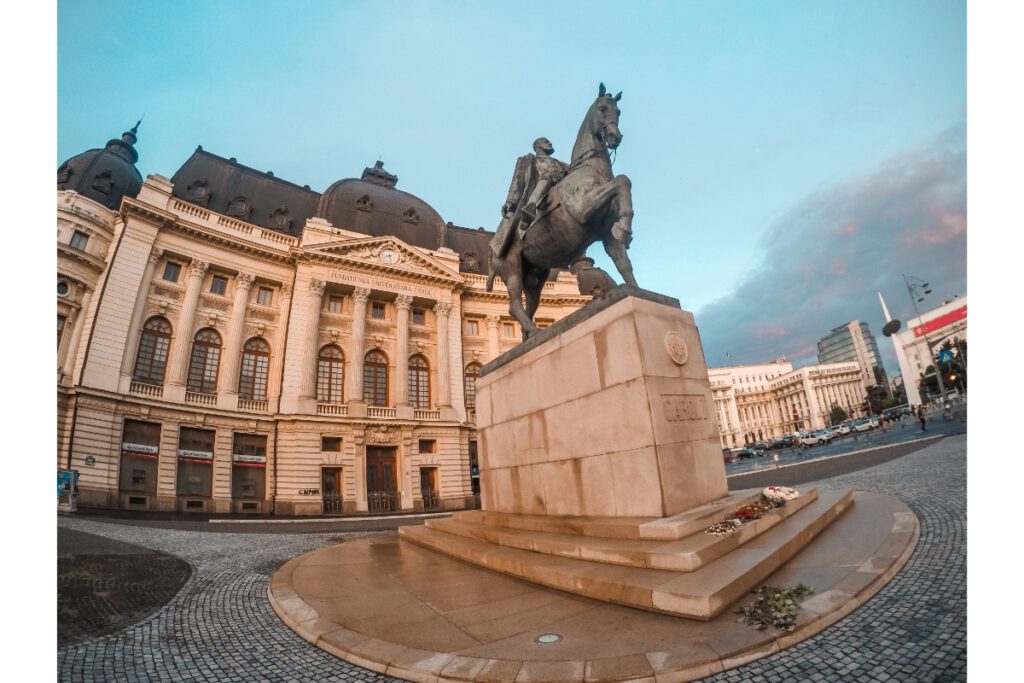
The capital of the country that used to be called “the little Paris of the East” due to some architectural similarities. It has several notable monuments to see, such as the Arc de Triomphe(which is a replica of the French one), the “People’s Palace”, which is the current parliament in Bucharest, and is located on a hill in the Romanian capital, near Unirii Square. It is the largest building in Europe and the second largest structure in the world after the U.S. Pentagon in Washington, D.C., USA. There is the Greek church of Stavropoleos on the street of the same name, built by the Epirus Stratonikeian Ioannikio. The city’s thermal baths are also well known. The old town is bustling with nightlife and is nice for walking around and eating. The prices are very good!
Read our ultimate travel guide for Bucharest
Brasov
One of the most important cities in Transylvania that boasts everything. A medieval yet vibrant and dynamic city with the Carpathian Mountains surrounding it. It is worth seeing the Gothic-style Black Church and the Greek church of the Holy Trinity, built by local Greeks. Brașov is the 7th largest city in Romania and is surrounded by the Carpathian Mountains, and has a beautiful natural landscape. It is located about 2 and a half hours away from Bucharest.

The Merry Cemetery
Located in the village of Săpânţa, it is famous for its colorful graves with paintings, poems, and scenes from their lives, for the respective persons buried in that place. It has been turned into an open museum, and surprisingly, it is a tourist attraction of the village. The man behind this idea is a Romanian craftsman, Ioan Stan Patras, who started the special formation of these crosses and graves in 1935. The inscriptions usually include some funny poems giving a different perspective on the concept of death.

Bran
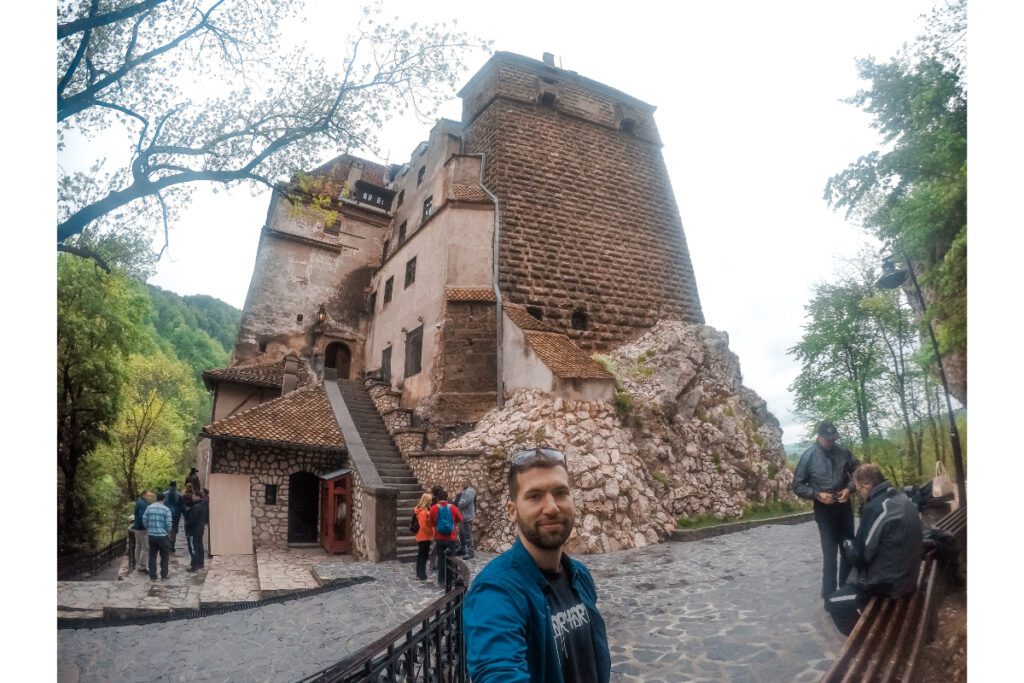
It belongs to the region of Brașov at a distance of only 30 km from it. Bran became famous thanks to the castle of the same name in the area. The castle is known as the castle of Dracula, and every year, thousands of tourists from all over the world flock to visit it. It was the inspiration for the Irish writer Stoker and his famous novel. However, there are many castles in Romania that are linked to the famous Dracula legend, such as Poenari Castle and Hunyad Castle.
There is a lot of talk and confusion about the connection between Dracula and Vlad Tepes, aka the Impaler, who certainly has no connection with them, apart from the brutal torture the latter inflicted on prisoners. The castle is not particularly imposing on the outside, but inside it is large with many rooms and hidden entrances and a wealth of material from old costumes to legends and images of Vlad, as well as a torture chair with nails.
Sinaia
The pearl of the Carpathians, as it is called, is due to its beautiful location. It is a medieval city with a rich history. The founder of the Sinaia monastery was Prince Michael Katakouzenos, who, according to legend, started building it immediately after returning from a pilgrimage to Sinai, hence the name. Near Sinaia is the Peleș Castle, once a residence for various Romanian royal families. The castle has over 160 rooms and is built of wood, stone, brick, and marble. The seven terraces surrounding it are decorated with statues, marble, and stone fountains. Its luxurious interior is also richly decorated with paintings, statues, ceramics, gold and silver plates, crystals, stained glass windows, and ivory sculptures. The remarkable thing is that this castle was the first building in Europe to be lit exclusively by electricity.

Timisoara
The second largest city in Romania and the most important economic and cultural center in the western part of the country. It is called the jewel of western Romania as well as Little Vienna. The city center consists mainly of buildings from the era of the Austrian Empire, due to the fact that it was under the Habsburg Empire for a very long time. You will also see many churches, with the tallest building being the Orthodox Cathedral, which stands at a height of 96 meters. The region’s mild climate has helped to have several public squares and plenty of green areas for strolling. Roses Park is the perfect place for a romantic stroll, as is the Botanical Garden. Many tourists still choose to walk along the Bega River. It has a lively nightlife, and many events and festivals take place in the city throughout the year.
Packing Tips & When to Go
The equipment you need to bring with you obviously depends on the time of year you choose to visit the country. In winter, the temperatures are quite low in Romania with frequent snowfalls, so you definitely need waterproofs, gloves, a beanie, and boots that don’t slip. In addition, it is advisable to have a safety wallet strapped to you, because it is often said that people steal, both in the capital and in other suburbs. Personally, during our visit to the country, there was no threat in Bucharest or in the provincial areas. An adapter for electricity is not needed as the sockets are the same as ours. The only necessary thing, because you will be walking quite a bit, especially if you live outside Bucharest, is a power bank so you don’t run out of battery on your phone or camera.
As far as the right seasons to visit the country are concerned, spring and autumn are the best. In the spring, all the natural parks and Carpathians, if you attempt some day trips outside the capital, are in bloom and lush green. Autumn also makes the landscapes magical, and the temperatures are quite favourable before the heavy winter arrives. Winter is best avoided due to cold weather and frequent snowfalls, which can spoil your planned excursions, and there are cancellations of itineraries. The only positive thing in the case of a winter trip to the city is the lower prices due to the non-tourist season. Summers, respectively, are hot, but most of the festivals in the country take place then.
Useful words
| Good Morning | Bună dimineața | You’welcome | Va rog |
| Good night | Noapte bună | Hi | Salut |
| Yes | Da | How are you? | Ce faci |
| No | Nu | My name is | Numele meu este |
| Thank you | Mersi | Good Bye | La revedere |
Romania Travel Guide FAQ — Everything you need to know
Yes, Romania became a full Schengen member on January 1, 2025, including land borders. This means no border passport checks when arriving from other Schengen countries. For EU/Greek citizens: just your ID card. For US/Canadian/Australian/UK citizens: no visa, 90-day Schengen rule applies.
No, Romania uses the Romanian Leu (RON). Despite EU membership since 2007, Romania has no firm date for adopting the euro.
Bran Castle / “Dracula’s Castle”, Pelș Castle in Sinaia, Brașov medieval old town, Bucharest Palace of Parliament and Old Town, Painted Monasteries of Bucovina, Danube Delta, Transfăgărășan road drive, Sibiu, Timișoara. Book tours via GetYourGuide.
Bran Castle is popularly known as “Dracula’s Castle” because Bram Stoker described a similar castle in his novel, and Vlad the Impaler (the historical inspiration for Dracula) may have passed through the area. However, historians note that Vlad had little actual documented connection to Bran. The castle is still absolutely worth visiting; it’s dramatically perched on a cliff and genuinely atmospheric.
Trains connect major cities (affordable but slow). Car rental is strongly recommended for Transylvania, Bucovina, and rural areas; the Transfăgărășan road is best by car. Bucharest has an excellent metro. Book a car rental at Discovercars.com.